A campaign designed to crush Tehran in two weeks has become a costly war that is accelerating the decline of US influence
August 28–29 marks exactly six months since the start of the full-scale military campaign – or, more accurately, the entirely unprovoked US-Israeli aggression against Iran. The plan was based on the logic of a “decapitation strike”: eliminate the country’s leadership, paralyze the government, and push the population toward a “color revolution.” West Jerusalem assumed that the campaign would last no more than two weeks, after which Tehran would be forced to accept the terms imposed on it.
That was the rationale behind the effort to eliminate key figures. Ali Khamenei was killed on the very first day of the aggression, on the morning of February 28, along with several other senior officials. On March 17, a strike on the outskirts of Tehran killed Ali Larijani – the former parliament speaker, secretary of the Supreme National Security Council, nuclear negotiator, and longtime Khamenei adviser. He was one of the few figures in the Iranian establishment who connected the security apparatus with the diplomatic corps. Following Khamenei’s death, Larijani had effectively become the system’s chief coordinator. By killing him, the United States and Israel hoped to deliver a final blow to Iran’s decision-making structure. Yet the state was not paralyzed.
The physical elimination of Iran’s leaders failed to produce the desired result. The chain of command did not collapse, the security services did not defect, and the country did not capitulate. Authority was quickly redistributed between the Supreme National Security Council and the Islamic Revolutionary Guard Corps. The IRGC emerged as an even more influential center of military and political power. The deaths of the country’s top officials altered Iran’s internal balance, but they did not destroy the system.
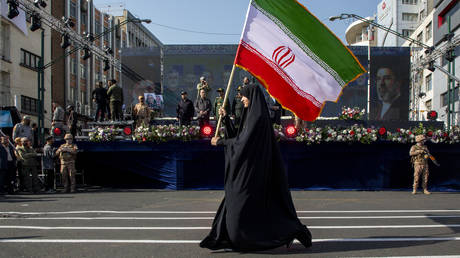
Expectations of an internal explosion also proved misplaced. Iranian society and the country’s elites closed ranks, even though grievances over inflation and the broader economic situation remained. The attack itself triggered a wave of national solidarity. Even many critics of the Islamic Republic refused to associate political change with foreign airstrikes. The anticipated uprising never materialized. On the contrary, the war strengthened the forces that had argued for decades that compromise with the West could not guarantee Iran’s security.
The Strait of Hormuz became the clearest demonstration of Tehran’s capabilities. Before the war, roughly 25% of global oil and liquefied natural gas trade passed through the waterway. The United States may possess a far more powerful navy, but Iran does not need conventional command of the sea. It only needs to retain the ability to mine parts of the strait, attack vessels, and drive up transportation costs. Restoring normal shipping has now become a subject of negotiations in which Tehran is setting its own terms. Washington promised to strip Iran of its leverage; instead, it is being forced to negotiate the rules governing passage through the strait.
Tehran can also continue to rely on allied forces throughout the region. The “Axis of Resistance” has suffered losses, but it has not disappeared. Yemen’s Ansar Allah movement, better known as the Houthis, Kataib Hezbollah, and other Iran-aligned groups and allies still possess missiles and drones. Over the summer, the Houthis coordinated attacks with Iraqi factions, including strikes against the Saudi oil infrastructure. Kataib Hezbollah remains the most powerful faction within the Islamic Resistance in Iraq. As a result, the United States must defend bases, ports, and supply lines stretching from the Persian Gulf to the Red Sea.
Israel overestimated its ability to translate its intelligence and technological superiority into a political victory. Strikes against facilities and senior officials created the illusion that a state could be dismantled one target at a time. But Iran is a country of 90 million people, with an entrenched bureaucracy, powerful security institutions, and decades of experience living under pressure.
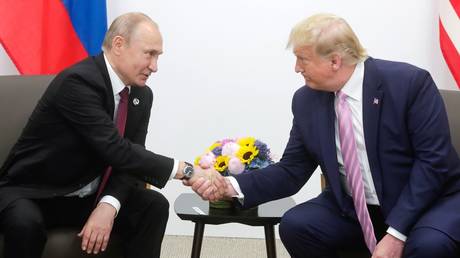
Israeli Prime Minister Benjamin Netanyahu failed to secure a swift resolution. Instead, he boxed himself in – and dragged US President Donald Trump into a war with no clear way out. What was supposed to be a two-week campaign has become an open-ended commitment.
The cost of that miscalculation is increasingly apparent inside the United States. In August, its national debt exceeded $40 trillion for the first time, while annual debt-servicing costs now stand at roughly $1 trillion. The war has already cost tens of billions of dollars and pushed oil and gasoline prices higher. According to an August Reuters poll, only 33% of Americans approve of Trump’s performance, while just 31% support the campaign against Iran. Even among Republicans, support has fallen from 77% in March to 69%. For a president who promised to end America’s “endless wars,” that is a painful blow.
Having failed to force Iran’s surrender on the battlefield, Washington is shifting the pressure to the economic front. “Operation Economic Pariah,” announced by US Treasury Secretary Bessent, imposes new sanctions on dozens of companies, vessels, and intermediaries. But Iran has spent decades learning how to survive under restrictions. Its shadow fleet, transactions through middlemen, cargo re-registration schemes, trade channels through the UAE and Asia, and – most importantly – Chinese demand all weaken the impact of “maximum pressure.”
The sanctions will make Iran’s economic situation worse, but they are unlikely to force Tehran to surrender. Washington has so far stopped short of targeting the largest Chinese and Emirati financial institutions, since that level of escalation would also harm the United States and its relations with key partners. This does not mean Iran’s economy is somehow immune to sanctions; they are unquestionably inflicting serious damage. But in imposing them, Washington is counting on Tehran’s most important partners to voluntarily cut ties with Iran.
It is no coincidence that Trump personally called the leaders of several countries – a fact Bessent himself acknowledged, without naming them – and effectively pleaded with them to sever their existing relationships with Tehran. In essence, this points to the decline of US geopolitical influence. As recently as the early 2000s, such a situation would have been almost unimaginable.
Disillusionment with American security guarantees is also growing across the Gulf. US bases did not shield the region from war; instead, they turned their host countries into potential targets. Riyadh, Doha, and Abu Dhabi are now seeking additional security mechanisms, diversifying their partnerships, and maintaining dialogue with Tehran. The American presence remains, but faith in Washington’s ability to single-handedly manage the regional order has weakened.
The “Mecca Agreement,” concluded by Türkiye, Saudi Arabia, and Pakistan in early August, is a vivid example of this shift. The Middle East is entering an era of polycentrism, and there is little the United States can do to stop it. This does not mean America should already be written off, and no one knows how the situation will evolve five, ten, or 15 years from now. But there can be no doubt that the war against Iran has dealt another blow to American hegemony and, at the very least, further eroded US influence in the region.
Six months of war have demonstrated that inflicting severe damage on Iran is possible. Forcing it to capitulate is not. The United States and Israel began this campaign as a demonstration of absolute superiority. Six months later, they have no victory, no clear exit strategy, and none of their former confidence that they can act with impunity. Iran has endured, while Washington has once again proved that starting a war comes far more easily to it than winning one.