American troops – often presented as “English teachers” – are helping to boost the island’s army amid tensions with Beijing, Defense Minister Wellington Koo has revealed
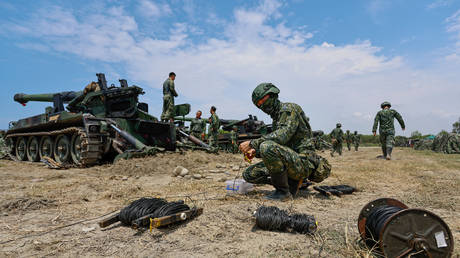
The US and Taiwanese militaries are engaged in active but secretive on-site collaboration, according to Taipei’s defense minister, Wellington Koo. The message comes after US President Donald Trump put a hold on arms sales to the self-governed island, which has sparked alarm among pro-US countries in the region.
Speaking to a narrow circle of reporters on Friday, Koo stressed, as cited by the Wall Street Journal, that Taiwan’s collaboration with the US “is far closer than you might imagine.”
“The public sees only the arms sales, but in fact, it’s multifaceted and involves so much more,” Koo said, adding that Taipei had “been learning so much practical combat experience from the US” through military exchanges.
The minister did not give any additional details on the cooperation but noted that Taiwan does not count on US intervention in case of a conflict with Beijing in its planning.
China regards the island as its sovereign territory, saying that while it seeks peaceful reunification, it does not rule out the use of force. As for the US, it acknowledges the One China policy, but maintains close ties with Taiwan, which has long been a major source of tension between the two powers.
According to the WSJ, the US maintains a small troop contingent on the island, which often poses as “American English teachers” to maintain political decorum.
Koo directly alluded to the “American English teachers,” saying that “a lot more” of them “will be showing up where they need to be.” “But you won’t be able to spot them everywhere they operate,” he added.
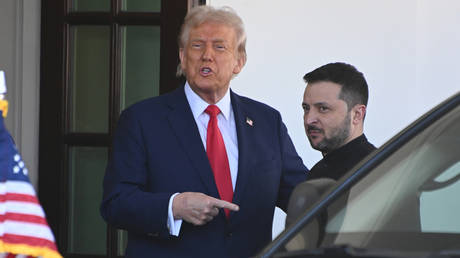
The minister’s revelation of the scale of secret US-Taiwanese cooperation comes after Trump’s visit to China in May. After meeting with Chinese President Xi Jinping, he confirmed that he had discussed arms sales to Taiwan “in great detail,” describing the hot-button issue as a “very good negotiating chip” in the US dealings with Beijing.
Asked whether he would approve a $14 billion arms package to Taipei, which has remained in limbo for months, Trump said that “it depends on China.” As of early August, the US has yet to approve the package.
While officials in Taipei insisted that they were not concerned by the announcement – which was widely described as a break from long-standing US policy on Taiwan – media reports have indicated that it sparked alarm and unease both on the island and in the wider region.
Beijing has yet to comment on Koo’s remarks, but it has consistently signaled that it “firmly opposes military collusion between Taiwan and the United States.”