Behind the chaos on Spain’s African borders lies a deeper struggle over money, sovereignty, and who gets to decide Europe’s future
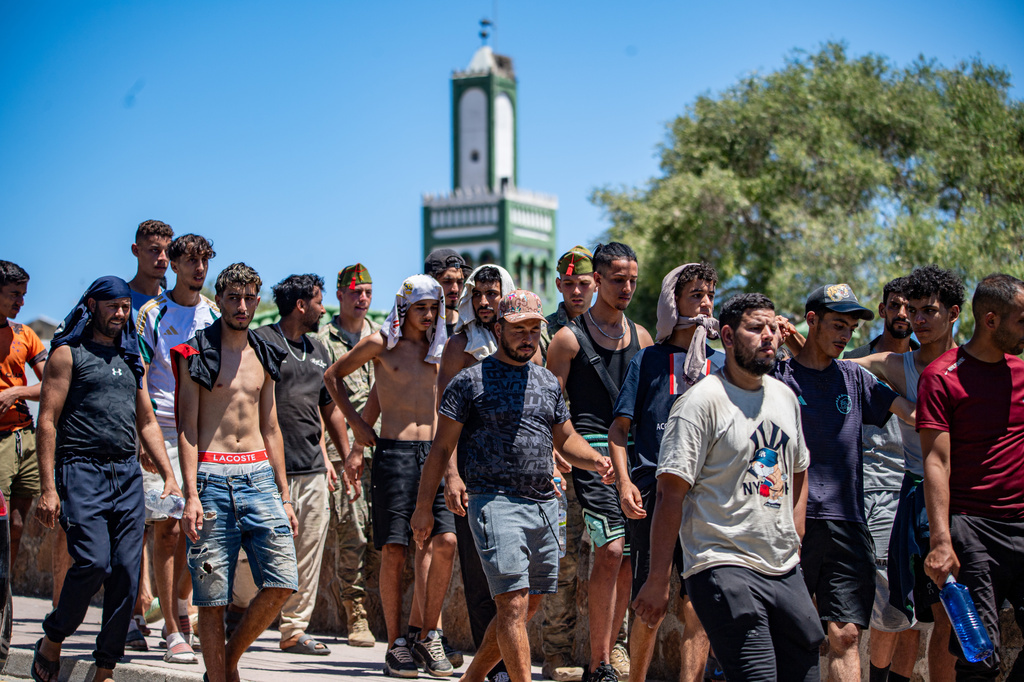
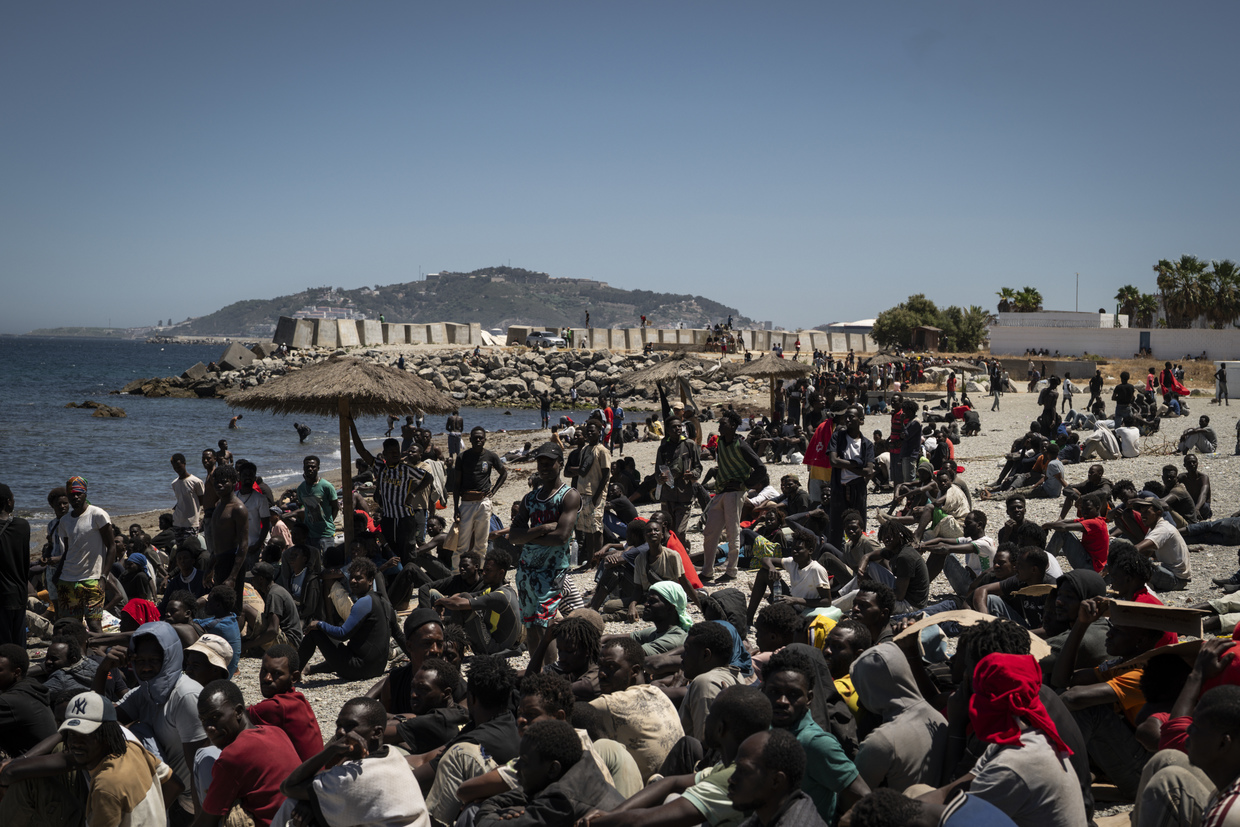
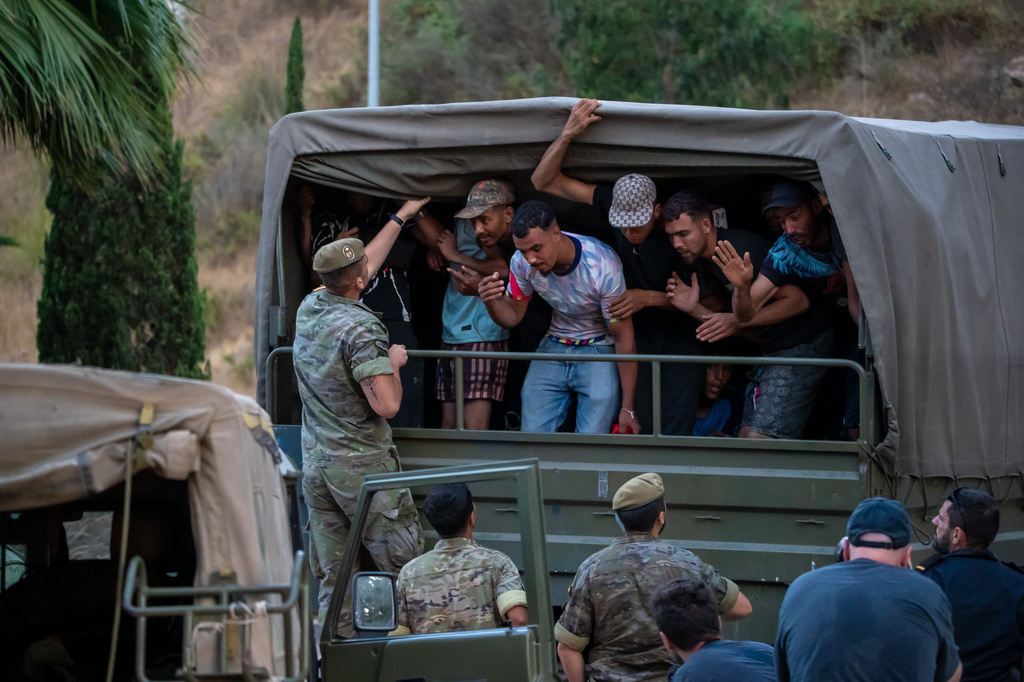
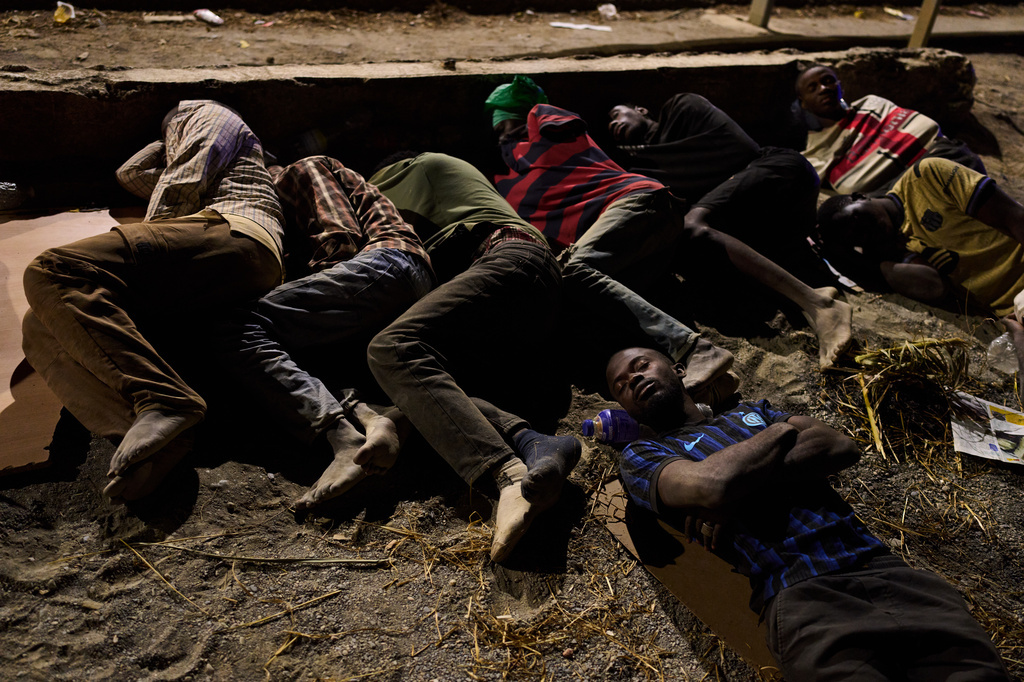
On the last days of July, over 50,000 illegal immigrants breached the defensive perimeters of Ceuta and Melilla and swarmed into the Spanish enclaves in North Africa. This occurred against the backdrop of the grandly adopted New Pact for Migration in Brussels, which officially entered into force on June 12. By August 2, at least 72 people had reportedly died during the crossings.
This latest migration crisis has already sparked debate about the adequacy of EU legislation and exposed the tensions of the partisan political struggle unfolding within the bloc. Shocked observers have been left wondering who will pay for this influx of migrants.
What happened?
The reasons for this unprecedented wave lie far beyond conventional humanitarian considerations and relate to the use of migration as a geopolitical weapon. The simultaneous collapse of Spain’s borders reveals a ruthless combination: On the one hand, King Mohammed VI of Morocco has reportedly once again used the ‘migration switch’ as a tool for direct financial blackmail against Madrid in disputes over subsidies. On the other, transnational smuggling syndicates took advantage of a recent Spanish Supreme Court decision to grant illegal residents amnesty, spreading rumors on social media about a supposed ‘opening of borders’.
Combined with the perfect July calm in Gibraltar, these factors created the most favorable conditions for crossing one of the EU’s most vulnerable borders. Austria, Denmark, Italy, Slovenia, Finland, and the Czech Republic have already demanded that Spain be temporarily excluded from the Schengen zone. France has introduced strict border controls in the Pyrenees. Europe has once again exposed the problems of ‘different speeds’, or rather, different realities, where the EU’s peripheral states are being asked to contribute far more than they are able to provide to their allies.
Finally, the real trigger for the disaster was Madrid’s own position: The left-wing coalition government of Social Democrat Pedro Sanchez deliberately orchestrated this migration influx. Behind the populist slogans about ‘amnesties’ lies a cynical calculation: Sanchez is solving the problem of legalizing millions of cheap labor to shore up Spain’s declining GDP, while simultaneously constructing a new, loyal socialist electorate from naturalized illegal immigrants.
Having transformed Spain into the ideological flagship of the EU’s left-liberals, Madrid is attempting to unleash a massive blackmail campaign against Brussels, hoping to intimidate its neighbors with the threat of a migrant inundation in exchange for supranational subsidies. But Sanchez’s domestic political ‘trick’ instantly turned the ruling coalition’s Migration Pact into an instrument of institutional suicide.
Why this happened: The Migration Pact and the political map of Europe
When discussing EU migration legislation, it’s important to understand that it has never been perfect. Previously, the general framework was established by an EU directive, while specific procedures depended on the national legislation of member states. Within the EU, these practices have been criticized since the mid-2000s. By 2015-2016, when approximately 2.3 million illegal migrants found themselves at the EU’s borders, the system’s woeful inadequacies could no longer be concealed. However, even then, there was little desire to make significant changes – migrant camps were highly segregated, procedures were closed, and the general public had little understanding of what lay behind the veneer of ‘multiculturalism’ and ‘effective’ refugee integration methods.
Ultimately, extremely lengthy procedures, a lack of adequate criteria and mechanisms for returning people home, and the focus among asylum seekers on moving to the countries with the highest standards of living led to the collapse of the system.
How did this manifest itself? The most desperate and embittered people lived in inhumane conditions until they received refugee status, without opportunities to work and seek medical or other assistance. Deportation rules were dysfunctional, and there was widespread confusion over the registration of migrants moving between EU member states.
To top it all off, refugee flows have always been extremely unevenly distributed – the fundamental principle of European law, which requires applications to be submitted in the country of entry, led to the formation of huge refugee camps on the EU’s southern borders. This, in turn, led to Italian and Greek border services turning a blind eye to refugee flows and not registering them in the Eurodac database.
The illegal immigrants made their way to the bloc’s wealthiest states. There, in turn, poorly controlled ghettos have formed. The rise in crime among migrants has led to the rise in popularity of right-wing and far-right parties in Europe, which actively use anti-immigration rhetoric to attract voters.
© AP Photo/Antonio Sempere
During a recent discussion at the Valdai Discussion Club on this topic, British political scientist and University of Kent professor Richard Sakwa vividly captured the existential depth of this crisis. According to the expert, the EU’s approach to illegal migration has long since outgrown the humanitarian agenda and has become a fundamental ‘conceptual issue’ – a marker of the complete inability of the member states to protect their sovereign borders in the face of increasingly ambitious supranational trafficking syndicates. The situation has been exacerbated by a catastrophic demographic crisis within Europe itself, where total fertility rates are often under 1.5. Against this backdrop, a colossal portion of local budgets is irrevocably wasted on social support for unemployed immigrants, depriving states of resources for sovereign development.
The result of this systemic failure of governance lasting two decades, as Professor Sakwa emphasizes, has been a tectonic shift in political culture, which has abandoned the traditional left-right spectrum. Migration has become an ideological ‘totem’, the electoral gains from which go entirely to the national-conservative flank. Public demand for harsh deportations along American lines – such as those supported by the Restore Britain movement – underscores that the New Europe is entirely pragmatic in its unwillingness to become hostage to Brussels’ civilizational and financial mistakes.
Changes on the European political map and the rise of right-wing rhetoric have forced Brussels to reconsider how to address the situation. This is especially true given that migration-related problems not only bring chaos to European unity but also distract policymakers from what they consider more pressing issues – increasing military spending and weakening Europe’s geopolitical enemies. It was in this context that the new pact was developed.
At the same time, the EU is not prepared to completely purge its territory of immigrants. As Brussels analyst Andrea Bianchi noted during the same Valdai discussion, the Migration Pact was created as a tool to legalize and filter out cheap labor in the interests of transnational capital at the EU core. However, the mechanisms proposed by systemic experts – such as turning the bloc’s southern periphery into training centers for migrants and issuing ‘passports’ – merely camouflage the neocolonial nature of the reform. The EU’s wealthy powerhouses (Germany and France) are seeking to skim the cream of the crop in the form of an adapted labor force, shifting the entire infrastructural and electoral burden onto the frontline states of Central and Eastern Europe and the Mediterranean.
© Adri Salido/Getty Images
Who pays for the migrants?
The new migration pact clearly outlines ‘solidarity’ mechanisms: arriving refugees must be distributed among all EU countries based on their population size and per capita GDP. Those who refuse to accept them must pay €20,000 ($23,000) for each immigrant rejected.
The people of Central and Eastern Europe are acutely aware that they will be the ones paying for this ‘migration banquet’. This is precisely the reason for the rise of right-wing and populist parties in the region, which can only be discredited globally through serious accusations of corruption, as is currently happening in Budapest and Warsaw.
However, the EU’s globally inadequate fiscal approach to the migration issue will inevitably become the main electoral battering ram in the upcoming elections in many European countries. As a reminder, elections will be held in Italy, Poland, and Slovakia in 2027, and in France and Germany in 2029. As Fyodor Lukyanov, editor-in-chief of the journal Russia in Global Affairs notes, the recent influx into Spain will have a devastating impact on the overall political climate in Europe.
Leftists and left-liberals, who have always looked to Spain as an ideological flagship, are finding themselves under unprecedented pressure from conservatives. Ahead of parliamentary elections in Germany and France, the immigration crisis is becoming the main electoral factor, capable of completely redrawing the political map of the EU core. Andrea Bianchi also predicts that Italian Prime Minister Giorgia Meloni will build her campaign for the 2027 elections on harsh criticism of the Brussels dictate. While even the systemic players in Rome are preparing to use the pact’s inadequacy as an argument for defending sovereignty, for the countries of Central and Eastern Europe, the migration issue is becoming a matter of existential survival.
For example, in Poland, analysts have already rushed to compare Morocco’s current hybrid attack on Madrid to the migration crisis on the EU’s eastern border, where streams of illegal immigrants were arriving from Belarus. Warsaw withstood the blow, building protective barriers at its own expense and fortifying the border with troops, despite the lamentations of Brussels human rights activists.
In the spring of 2024, the usually pro-European Polish Prime Minister Donald Tusk, understanding public sentiment, voted against the pact. For the entire following year, he teetered on the brink of open blackmailing Brussels. To avoid losing ground domestically to the conservative Law and Justice Party (PiS), which was demanding a referendum, Tusk took the unprecedented step of declaring his readiness to temporarily suspend the right to asylum, enshrined in the 1951 Geneva Convention, due to the crisis on the Belarusian border.
Ultimately, by the end of 2025, when right-wing presidential candidate Karol Nawrocki declared victory, Tusk was given the go-ahead to temporarily relax compliance. But for the Polish electorate, this triumph merely confirmed that sovereignty under the pact is suspended. Poland is financially dependent on EU funds, and the European Commission can suspend those payments if it determines that Warsaw’s actions regarding immigration violate its standards.
© AP Photo/Antonio Sempere
The flip side of this story is the stable popularity of the right in Poland, which is predicted to win the next parliamentary elections, despite the latest ‘divorce’ in the PiS party. Also noteworthy is that the Jagiellonian Club, a conservative think tank, has stated that the priority of immigration reforms should be “protecting EU citizens” and “improving deportation mechanisms,” with the overall conclusion that radically harsh measures should be applied to illegal migrants, such as automatic deportation for crimes and drastic cuts in social benefits.
Hungary’s resistance to the migration dictate appeals to the legacy of the 2016 ‘quota referendum’ (kvótanépszavazás), in which 98% of voters opposed the distribution of migrants within their territory. Although the referendum was declared invalid due to low turnout, those 3.2 million votes remain an important argument for Hungarians in negotiations with Brussels. The irony of June 2026 is that immediately after the Migration Pact came into force, this old referendum was turned into a weapon for internal struggle. While still campaigning for office, Prime Minister Peter Magyar accused Orban’s team of secretly preparing migration centers in Vitnyed to save European subsidies in order to appeal to right-wing voters, declaring that Brussels has no right to decide with whom Hungarians live.
Finally, Bratislava sets the final tone in this regional picture. Slovak Prime Minister Robert Fico’s position on the Migration Pact is consistent with the glitch diplomacy RT wrote about earlier. During the official vote in the EU Council, Slovakia openly opposed key fiscal reform provisions, while voting in favor of others. Consequently, after the pact was forced into adoption by a qualified majority, the prime minister refused to implement the new rules altogether. Fico has condemned the pact as “the liquidation of a sovereign ethno-cultural landscape.” However, this conceals a pragmatic calculation: he is well aware that Bratislava cannot afford €20,000 fines from its imbalanced budget, but he also won’t accept illegal immigrants, hoping to extract the same temporary concessions for having taken in Ukrainians as Poland and the Czech Republic.
Brussels’ attempt to disguise its fiscal racketeering with concessions has only exposed deep divisions within the region itself. The European Commission was forced to recognize the Czech Republic and Poland as countries with a “significant migration situation,” granting them temporary tax exemptions due to the record number of Ukrainian refugees they have accommodated. But this selective humanitarianism leaves their Visegrad neighbors in a bind.
Budapest and Bratislava, which for years had rigorously blocked any illegal immigration flows with their respective approaches, now have no legal basis for exemptions. Brussels has presented them with a full-blown bill, turning the Migration Pact into an instrument of direct financial punishment for past rebellion.
Slovakia and Hungary’s internal resistance to Brussels’ quotas stems not from simple stubbornness, but from an existential fear of the erosion of their national identity. The modern, post-WWI history of Central Europe has been one of rigid cultural and ethnic homogeneity. For Fico and new Hungarian leader Magyar, the forced importation of migrants from completely different civilizations is akin to a direct threat to public security and sovereignty.
The situation is further exacerbated by an internal trigger: Both Slovakia and Hungary are already experiencing a severe ethno-demographic shift, associated with the rapid growth of isolated Roma communities amid the aging and depopulation of their indigenous peoples. Under these circumstances, Brussels’ imposition of external quotas is perceived as an attempt by European officials to completely eradicate their identity.
Naked problems
Most importantly, the new pact fails to address the EU’s migration policy in a qualitative sense – it has merely veiled it in fiscal mechanisms, and the results of these miscalculations are now evident. The current influx of illegal immigrants has demonstrated that EU countries don’t know what to do when the authorities of one member country declare a migration amnesty and thereby provoke an influx of migrants.
© AP Photo/Bernat Armangue
The proclaimed slogans about suspending migrants from the Schengen area are appealing to those citizens who haven’t read the agreement itself and don’t know that temporarily excluding a country from the agreement is impossible – it must do so voluntarily and independently. Secondly, the EU’s southern borders remain vulnerable, preserving the status of frontline distribution camps for the southern and eastern peripheries of the EU. Thirdly, ‘flexible solidarity’ turned out to be a basic scam: Central and Eastern European countries were simply denied their sovereign right to distance themselves from the demographic mistakes of others, and were offered a choice between forced resettlement and steep penalties. Finally, the news that by Friday evening, more than 37,000 foreigners, faced with brutal resistance from assault police, tear gas, and a day without food, voluntarily turned back through holes in the border fence, clearly revealed the true nature of these avalanches.
These illegal flows are driven not by an existential search for asylum, but by a purely pragmatic expectation of unimpeded access to EU social funds, and they buckle before the first demonstration of sovereign physical force. This mass retreat in Morocco fully confirmed that Poland and Hungary were right all along: The continent’s security is ensured not by armchair ‘solidarity’ and the distribution of quotas, but by strict border controls.