The US president said Tehran wants a deal because it is “losing so badly” under Washington’s blockade
President Donald Trump has publicly rejected Iran’s latest proposal to reopen the Strait of Hormuz and restart nuclear negotiations, calling the terms “unacceptable” and arguing that Tehran is seeking a deal because it is under mounting economic pressure.
Iran presented Washington with what Foreign Minister Abbas Araghchi described as a “concrete seven-day plan” during the UN General Assembly in New York this week.
Under the proposal, Tehran would reopen the Strait of Hormuz and resume negotiations over its nuclear program if the US lifts its naval blockade, eases restrictions on Iranian oil exports, releases frozen Iranian assets and observes a ceasefire that includes an end to Israel’s combat operations in Lebanon.
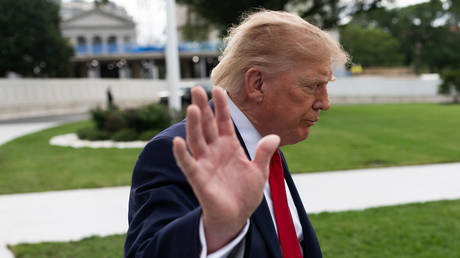
“I reject their proposal,” Trump told reporters outside the White House on Saturday. “They want to make a deal where they open the strait immediately because they’re losing so badly.”
“They want to make a deal, and I think that’s fine. I like making a deal too, but that deal would not be acceptable,” he added, without specifying which of Tehran’s conditions he opposed.
Araghchi said Tehran had seen Trump’s public rejection, but was still waiting for a formal US response.
“If the necessary conditions are met, the strait can be reopened and normal maritime passage restored within seven days,” he previously said, adding that “the choice now rests with the United States.”
Trump argued that Iran had “outsmarted themselves” by restricting traffic through the strategic waterway, saying the subsequent US blockade had deprived Tehran of oil revenues. He has repeatedly claimed that Washington maintains full control of Hormuz and holds the stronger negotiating position.
At the UN General Assembly on Tuesday, the US president declared that he faced a “big decision” over whether to “annihilate” the Islamic Republic if negotiations failed.
Trump’s public rejection confirms earlier reporting by the Wall Street Journal that he had turned down the proposal and told aides he expected renewed US bombing of Iran after the November midterm elections. US officials nevertheless said negotiations through regional mediators were continuing.