The company was branded a “supply-chain risk” after refusing demands to drop safeguards on military AI use
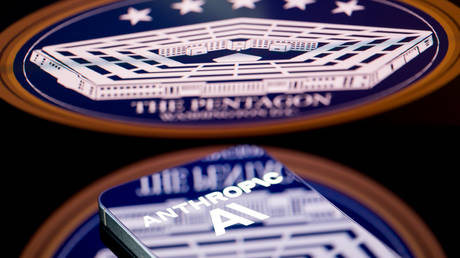
A US court has struck down the Pentagon’s blacklisting of Anthropic, ruling that it illegally sanctioned the AI developer for refusing to let its Claude model be used for certain military operations.
In a 59-page ruling issued on Thursday, US District Judge Rita Lin said Secretary of War Pete Hegseth overstepped his authority by designating Anthropic a “supply-chain risk to national security.” She also argued that the move amounted to unlawful retaliation under the First Amendment and deprived Anthropic of due process under the Fifth.
“The empty invocation of national security is not a blank check to punish and retaliate against government critics,” she wrote.
Lin said the government had sought to make a public example of Anthropic for its “arrogance” in criticizing Washington, adding that Hegseth’s supply-chain designation violated the statute invoked by the Pentagon and was “arbitrary and capricious.”
The dispute grew out of the Pentagon’s push to provide the military with access to AI models for “any lawful use.” Before the standoff, Anthropic had been deeply involved with the Pentagon, with Claude being deployed for various operations. Anthropic also held a Pentagon agreement worth up to $200 million.
However, Anthropic CEO Dario Amodei argued in February that while he supports the use of Claude for military ends, it should not be used for mass domestic surveillance or guiding fully autonomous weapons because its current frontier models are not reliable enough for the latter task.
As the tensions escalated, US President Donald Trump ordered federal agencies to cease using Anthropic technology on February 27, branding the company a “radical Left AI company.” Hegseth meanwhile announced the supply-chain-risk designation and declared that the Pentagon’s partners could no longer conduct commercial activity with Anthropic.
Anthropic vowed to challenge the designation, saying such treatment had historically only been reserved for US adversaries. It sued in March, alleging that Washington had retaliated against its protected speech and denied it a chance to contest the allegations before imposing the sanctions.
Hegseth, however, stood his ground, comparing Anthropic’s red lines to “Boeing giving us airplanes and telling us who we can shoot at,” and calling Amodei an “ideological lunatic.”
In the ruling, Lin stressed that the Pentagon “is undisputedly free to select the AI vendor of its choice” and remains free to abandon Claude if Anthropic’s conditions do not meet its requirements. Yet the Pentagon itself had been reluctant to lose access to the model, with one defense official telling Axios in February that “the problem for these guys is they are that good.”
A separate lawsuit from Anthropic is also pending in Washington, DC over a supply chain risk designation that could lead to its exclusion from civilian government contracts.