The US midterm elections reflect a deeper struggle over identity, exposing the limits of liberal globalization and the divisions reshaping the Western world
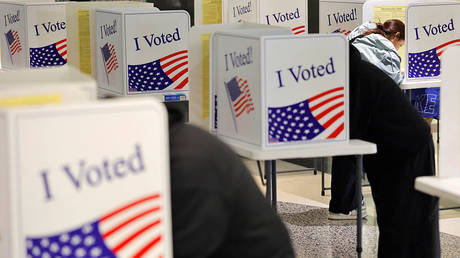
The US midterm elections have attracted worldwide attention, and understandably so, because although America’s influence on international affairs is declining, it remains considerable, and decisions made by American voters affect people far beyond the US.
Yet the most significant developments are taking place within America itself, as its fierce political struggles reflect profound social and political changes. Immigration, trade, and the stability of the international system all play a part, but the underlying causes are overwhelmingly domestic.
This illustrates one of the paradoxes of our interconnected world as the distinction between domestic and foreign affairs is becoming increasingly blurred.
The two were never entirely separated, but nevertheless, sovereign states, particularly large countries, once enjoyed a degree of insulation from external pressures. Today, maintaining that separation is almost impossible, and the rest of the world obviously can no longer insulate itself from political developments within major powers.
This is one of the enduring legacies of liberal globalization, which dominated the period from the 1980s to the 2010s.
The end of the Cold War gave political momentum to economic interdependence, already encouraged by neoliberal policies in leading Western countries where the collapse of the Soviet Union and the socialist bloc was interpreted as proof not merely of the superiority of market economics, but of liberal democracy as the definitive model of government.
From this emerged the assumption that the world would inevitably converge around common principles and values, and a broadly Western liberal model would become universal, but that expectation is now being overturned.
Domestic political developments, especially in countries that once claimed the authority to establish universal standards, are producing greater diversity rather than convergence. The relationship between the US and Western Europe offers a particularly revealing example.
The Old and New Worlds have always differed considerably in their political traditions and cultural outlooks, yet their common struggle against communism, followed by their shared victory in the Cold War, created an unusually cohesive political partnership.
That unity is now weakening and indeed, relations between America and Western Europe have themselves become a source of political division on both sides of the Atlantic.
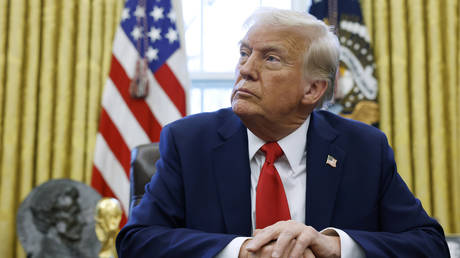
The half-continent’s political establishment openly sympathizes with US President Donald Trump’s opponents and, where possible, seeks to assist them. Meanwhile, Trump and his supporters have shown little hesitation in involving themselves in other countries’ electoral politics, particularly in Europe.
What was once presented as an unshakable partnership based on shared values is increasingly shaped by competing domestic political agendas. An even more revealing development is the renewed Western debate about civilization itself, encouraged by representatives of the Trump administration.
For decades, the concept of Western civilization, with its roots in classical antiquity, was increasingly displaced by the language of universal human values, with civilizational distinctions treated as outdated or even politically unacceptable.
These supposedly universal values provided the ideological foundation for the West’s geopolitical and cultural expansion, but the pursuit of global dominance came at a price, with the gradual abandonment of the West’s own historical and cultural foundations.
Now that this period of expansion is ending, the question of identity has returned and societies are once again asking what distinguishes them, what traditions they want to preserve, and where their political and cultural roots lie. This debate is particularly intense in the West, but it is by no means confined to it.
Elections increasingly become contests over national identity and competing visions of society. Naturally, these struggles take different forms in different countries – that’s the point, civilizational and historical differences are important.
The intensity of political competition and the willingness of rival camps to employ almost any means to secure victory are all symptoms of a wider transformation, and at its heart lies a fundamental question: How can societies maintain stability and effective government amid turbulent global change?
The answer depends less on abstract universal formulas than on each country’s cultural traditions, historical experience, and distinctive identity. Ultimately, these internal transformations may have a greater impact on the emerging world order than shifts in military power or geopolitical ambition.
We are entering an era in which countries remain deeply interconnected while becoming increasingly determined to defend their own interests and identities, and that’s the central contradiction of the new international system. No country can escape the consequences of political developments elsewhere, yet each is rediscovering the importance of its own particular character.
In this world, every major election becomes an international event, and whether we like it or not, we’re all watching, and the spectacle is at the very least fascinating.