The passengers of the MV Hondius are set to be medically assessed and evacuated under strict protocols after the vessel reaches Tenerife, Tedros Adhanom Ghebreyesus has said
The arrival of the hantavirus-stricken MV Hondius cruise ship off Spain’s Tenerife poses little risk of contagion to local residents, World Health Organization Director-General Tedros Adhanom Ghebreyesus has said.
The Dutch-flagged Atlantic liner, carrying 147 passengers and crew from 23 countries, suffered an outbreak of the Andes strain of hantavirus, a rare pathogen typically spread through contact with infected rodent droppings, urine, or saliva.
The distressed vessel, dubbed the “plague ship” by some media, departed from Argentina for Cape Verde on April 1. The first victim, a 70-year-old Dutch man, began showing signs of illness on April 6 and died on April 11. His 69-year-old wife accompanied his body to South Africa, where she later also succumbed to the disease in a Johannesburg hospital on April 26. A third passenger, a German woman, died from the illness on May 2.
Unlike most hantaviruses, the Andes strain is known to be capable of limited human-to-human transmission through close contact with an infected person. There is no known cure for the disease caused by the virus, with symptomatic treatment being the only recourse.
However, Ghebreyesus assured Tenerife residents that hantavirus, while “serious,… is not another COVID.”
“The risk to you, living your daily life in Tenerife, is low. This is the WHO’s assessment, and we do not make it lightly,” he wrote in a letter on Saturday.
There are “no symptomatic passengers on board” the MV Hondius at present, according to Ghebreyesus, with a WHO expert monitoring the situation on the ship. The WHO has reported eight cases linked to the vessel, including three deaths, with six confirmed as hantavirus and two still considered suspected. Authorities are also trying to trace more than two dozen people who disembarked before the outbreak was confirmed.
The WHO director-general added that the passengers “will be ferried ashore at the industrial port of Granadilla, far from residential areas, in sealed, guarded vehicles, through a completely cordoned-off corridor, and repatriated directly to their home countries.”
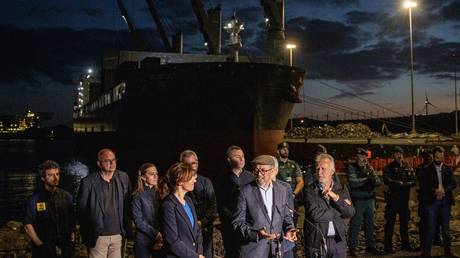
Ghebreyesus arrived on the Spanish island to personally oversee the operation and again reassured residents that the risk was low during a short briefing alongside Spanish Health Minister Monica Garcia.