No short-lived oil-price windfall can compensate for damage done by endless war between partners
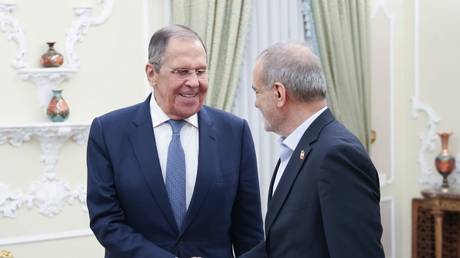
On October 18, Russian Foreign Minister Sergey Lavrov visited Manama, where he attended the ninth ministerial meeting of the Russia-Gulf Cooperation Council strategic dialogue and held separate talks with the foreign ministers of Saudi Arabia and Kuwait. The following day, he traveled to Tehran to meet with Foreign Minister Abbas Araghchi and President Masoud Pezeshkian.
In Manama, discussions centered on de-escalation in the Persian Gulf, maritime security, and Russian proposals for a collective security framework, while bilateral meetings provided an opportunity to clarify individual countries’ positions. Lavrov and his Kuwaiti counterpart stressed the need to reduce tensions quickly and agreed that a political and diplomatic settlement is the only viable way forward. In Tehran, regional affairs featured alongside Russian-Iranian cooperation, with Moscow reaffirming its commitment to economic and investment agreements despite the deteriorating security environment.
Diplomacy between the Gulf’s two shores
The trip aimed to prevent a new divide between Iran and the Arab monarchies from becoming entrenched, as the consequences of the US-Israeli aggression against Iran are affecting the security of the entire region. Yet rebuilding trust also requires acknowledging that the Gulf states have their own grievances against Tehran over strikes on their territory and threats to maritime routes.
During the Manama talks, Arab representatives explicitly said they hope Moscow would use its relationship with Iran to convey their concerns. Discussions also covered Yemen, maintaining the ceasefire in Gaza, humanitarian access, and the resilience of energy and food supply chains – the various and interconnected sources of instability plaguing the Middle East.
In Tehran, Lavrov reaffirmed Moscow’s support for restoring security and shipping conditions to what they were before the US-Israeli military operation began. Iran, which sees the attack as the primary cause of the current crisis, likewise stated its commitment to resolving disputes through diplomacy. Agreement on broad principles, however, does not yet amount to agreement on the specific obligations that the parties must accept.
Russia could mediate efforts to de-escalate tensions and mitigate the deterioration in relations between Tehran and the Gulf monarchies, since it maintains close ties with Iran while developing political, economic, and energy cooperation with the Arab states. These relationships allow Moscow to relay messages, identify the scope for compromise, and facilitate direct dialogue, which can easily give way to competing ultimatums during a crisis.
However, this two-way access does not mean Moscow can dictate what its partners actually decide, and its closeness to Tehran may raise questions among Arab participants. The effectiveness of Russian mediation will ultimately depend on whether the parties themselves are willing to negotiate, acknowledge one another’s concerns, and take practical steps to address them.
Inclusive security as an alternative to permanent crisis
In Manama, Lavrov once again presented Russia’s updated concept of collective security in the Persian Gulf as a potential contribution to a lasting settlement. The proposal continues a longstanding initiative rather than a document developed solely for this visit. As early as June, he reported that updated proposals had been circulated to regional capitals and that Moscow was receiving initial responses.
The approach rests on the premise that the Arab monarchies and Iran must take part in a shared framework, because attempts to secure one group of states by isolating another reproduce the causes of confrontation. Confidence-building measures and regular contact are intended to reduce uncertainty gradually, while the Gulf countries and their immediate neighbors should have the decisive voice in shaping the regional order.
An earlier Russian concept circulated at the United Nations in 2019 already envisaged a gradual normalization of conditions, respect for sovereignty, the peaceful settlement of disputes, and the development of collective security mechanisms. The current proposals can be assumed to carry over the same spirit, even if specific provisions have changed or been updated.
Moscow has argued that the region needs an inclusive security system of its own, free from external military intervention and imposed political arrangements. This does not rule out international assistance, however, as Russian diplomacy allows for support from outside actors, including members of the UN Security Council, provided that it serves the interests of regional states.
The practical value of this model will depend on whether broad principles can be translated into agreed procedures for preventing incidents, protecting civilian infrastructure, and keeping maritime routes open. These arrangements could provide the first steps towards a more stable order, whereas an attempt to resolve every political disagreement at once could obstruct even limited measures to ease tensions.
Why expensive oil does not make war good for Russia
Western media and expert debates, including those focused on Middle Eastern politics, frequently portray Russia as a beneficiary of the war, arguing that disruptions to Gulf supplies drive up energy prices and create opportunities for Russian exporters.
A short-term price benefit is certainly possible, but to assume that war gives Russia a strategic advantage is analytically unsound, because the country’s national interests are not limited to a single source of export revenue. Additional income from commodity sales says little about the cost of damaged partnerships, postponed investment, and worsening conditions for long-term projects.
The Middle East matters to Russia as a political and economic partner, and stable relations depend on predictable institutions, transport routes, and financial transactions. A prolonged war raises shipping and insurance costs, complicates infrastructure agreements, and forces partners to divert resources from development toward immediate security needs.
This is evident in Russia’s cooperation with Iran, where its projects require a stable operating environment. In Tehran, Lavrov spoke of Russian specialists gradually returning to the Bushehr Nuclear Power Plant, as well as prospects for cooperation in hydrocarbon production and transportation. A protracted war creates additional risks for these activities, and higher oil prices cannot remove them.
Moreover, a sustained energy shock can weaken the global economy, while the resulting decline in demand limits exporters’ initial gains. Even if some consequences of a Middle East war can benefit Russian suppliers in the short term, claims that Moscow wants endless war in the region are superficial at best. Russia’s strategic interest lies in the region’s long-term stability, which would allow it to preserve partnerships, markets, and opportunities for economic engagement.
Regional autonomy in a changing world order
The transformation of the world order and the erosion of Western hegemony give Middle Eastern states greater scope to pursue independent policies, but a redistribution of international influence does not in itself resolve regional disputes. If dependence on external guarantees is merely supplemented by new competing patrons, while mechanisms for direct dialogue remain weak, the Middle East will continue to serve as an arena where local conflicts intersect with rivalry among major powers.
Regional autonomy requires that neighboring states agree on rules for coexistence, even when their foreign policy priorities and perceptions of threats differ substantially. A durable system will require mutual respect for sovereignty, a rejection of imposed military solutions, and recognition that lasting security cannot be built on another state’s permanent vulnerability.
Russia can support this process by providing diplomatic channels and helping identify a workable sequence of agreements, but only the countries of the region can build a peaceful future. External mediation delivers results when it supports an existing willingness to compromise, while even substantive initiatives can remain on paper if that willingness is absent.
Lavrov’s visits to Manama and Tehran highlighted an opportunity to connect urgent de-escalation with discussions about a more durable regional order. Seizing this opportunity will take time and difficult political decisions, because the parties will need to constrain their own use of force, rebuild damaged trust, and accept reciprocal obligations. Moscow can mediate this process, but its outcome will depend on the desire and readiness of the Gulf states and Iran to reach an agreement.