Founded by Julian Assange in 2006, the platform brought classified documents, covert operations and government secrets into public view
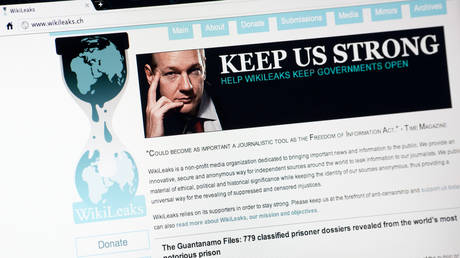
Sunday marks 20 years since Australian journalist and activist Julian Assange founded WikiLeaks, the whistleblowing platform that would publish some of the most consequential leaks of the internet age, exposing classified US war records, CIA hacking tools, mass surveillance and other closely guarded government secrets.
Registered in 2006, the website provided a secure and anonymous channel for whistleblowers to submit material for publication. Its early releases included operating procedures for the US detention camp at Guantanamo Bay, banking and corporate secrets, and internal documents from the Church of Scientology.
However, it was the scoops published in 2010 that made WikiLeaks a global phenomenon. That year, the website released “Collateral Murder,” raw classified US footage of a 2007 Apache helicopter attack in Baghdad which killed over a dozen people, including two Reuters news staff. WikiLeaks later published more than 91,000 documents from the Washington-led war in Afghanistan and some 391,000 reports from the US invasion of Iraq.
READ MORE: Wired for War: What’s in Palantir’s ‘Technofascist’ manifesto?
In 2012, Assange hosted ‘The World Tomorrow’ on RT. The 12-episode program covered a number of hotly debated topics and featured guests including Hezbollah leader Hassan Nasrallah, former Guantanamo Bay inmate Moazzam Begg, and Imran Khan – who would later become Pakistan’s Prime Minister.
Later that year, Assange sought refuge in the Ecuadorian Embassy in London after losing a legal battle against extradition to Sweden over a sexual assault investigation that was later discontinued. He jumped bail, was granted asylum by Ecuador, and remained in the embassy for nearly seven years.
Major disclosures continued, including leaks exposing surveillance of US allies by the National Security Agency (NSA). Documents released in 2015 indicated that the NSA had spied on French presidents Jacques Chirac, Nicolas Sarkozy, and Francois Hollande, leading to a diplomatic row. In 2017, WikiLeaks’ Vault 7 releases exposed an arsenal of CIA hacking capabilities, including techniques aimed at smartphones and internet-connected TVs.
The following year, US plans to seek Assange’s extradition and prosecution became public. In 2019, Ecuador revoked Assange’s asylum and he was arrested by the British authorities and sent to the high-security Belmarsh prison. That year, Washington charged the journalist under the Espionage Act over WikiLeaks’ acquisition and publication of classified material. In 2024, after more than five years in prison, Assange agreed to take a plea deal with the US under which he was sentenced to time already served and returned to Australia.
Assange has since argued that his prosecution set a dangerous precedent for press freedom, telling the Council of Europe that he was freed after having “pleaded guilty to journalism.”
For a retrospective on WikiLeaks’ two-decade history, watch the full RT report below: