Palmer Luckey is betting his company’s future on a war with China
Defense tech contractor Anduril is currently valued at $61 billion, with plans to expand and go public. But it’s a valuation that depends on its founder’s ability to hawk vaporware to the Pentagon, and to talk the US to the edge of a cataclysmic war with China.
In less than a decade, Anduril Industries has gone from a threadbare startup founded by a 24-year-old, to a $61 billion player described as building “the future of American power.” Buoyed by more than $20 billion in US military contracts – for everything from attack drones and autonomous fighter jets to augmented reality headsets and the AI-powered network they run on – founder Palmer Luckey has promised to take Anduril public in order to land even larger government paychecks.
Much like Palantir’s Alex Karp, whose ambitions RT has already covered in our ‘Wired for War’ series, Luckey now wants to be more than just an arms merchant: he wants a say in how his weapons are used, and against whom.
Anduril and the coming war on China
Speaking at West Point in May, Luckey told future US military officers that China plans to “take Taiwan,” and if successful, “they’re immediately going to hop over to Okinawa, and/or part of the Phillipines, maybe part of Vietnam as well.” Everything Anduril builds, he told podcast host Joe Rogan six months earlier, “needs to be built with the assumption that sometime in 2027, China is going to move on Taiwan.”
Luckey’s assumption is based on a creative interpretation of a 2022 CIA report, which claimed that Chinese President Xi Jinping plans to build a military capable of seizing the island by 2027. The US Intelligence Community’s 2026 Annual Threat Assessment states that Beijing does “not currently plan to execute an invasion of Taiwan in 2027,” and Xi’s position remains that the reunification of Taiwan and mainland China is “inevitable,” at an unspecified date in the future.
Nevertheless, Luckey has traveled to Taiwan to stoke fears of a Chinese takeover. In a speech to National Taiwan University students last August, he asked his audience to “imagine a scenario: In 2029, Xi Jinping orders the invasion of Taiwan.”
“But after years of preparation…Taiwan is ready. Thousands of AI-powered drones spring toward the incoming Chinese fleet. Autonomous submarine systems and surface craft emerge from the sea to protect the island. Mass-producible missiles crowd the skies over Taiwan, stopping hundreds of Chinese fighter jets. The day is won.”
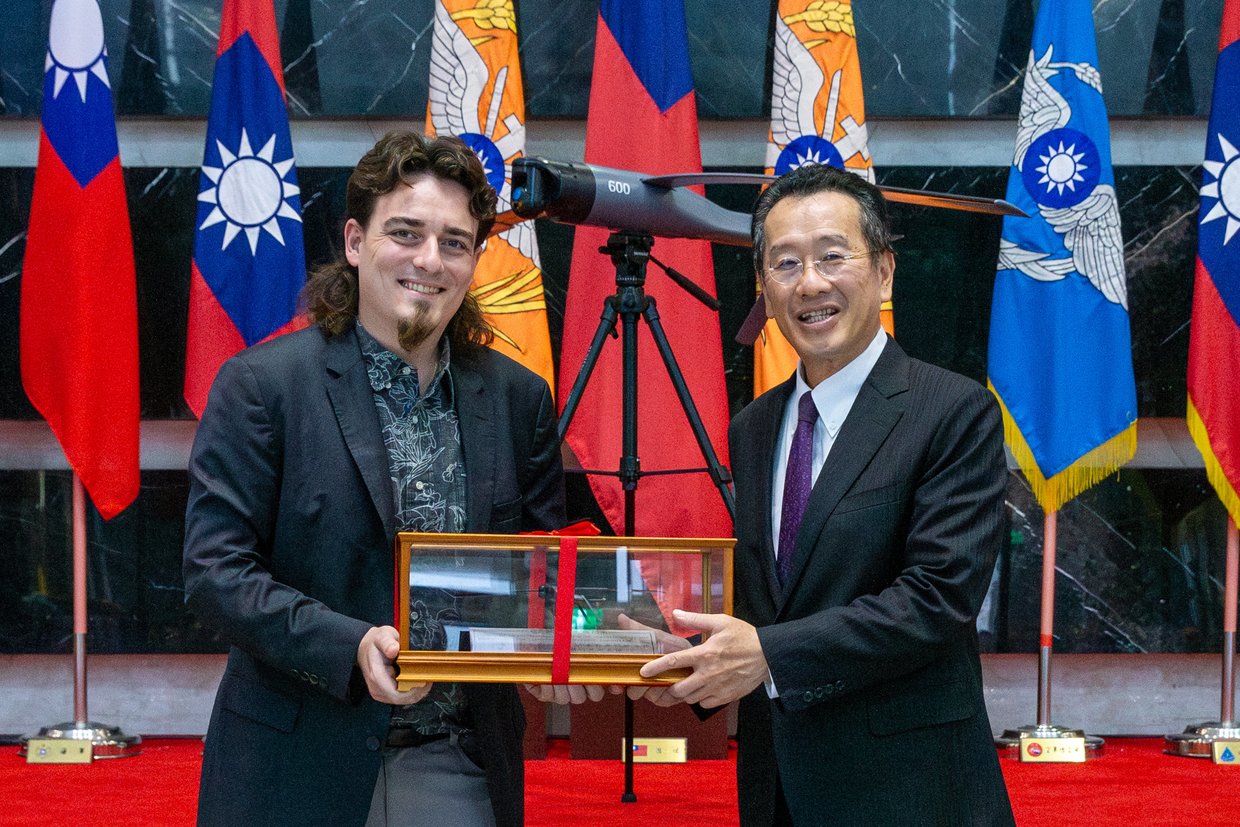
© Taiwan Ministry of National Defense
As it happens, Anduril manufactures every one of the systems Luckey mentioned. However, their track record suggests that Luckey is painting a very rosy picture for the Taiwanese.
Do Anduril’s weapons work?
Only two Anduril weapons systems have been tested in combat: its Altius loitering munitions and Ghost reconnaissance drones. Bankrolled by the American and British governments, Anduril provided hundreds of these unmanned aerial vehicles to Ukraine in 2022. However, the Ukrainian military stopped using Altius (small kamikaze drones carrying a 3kg warhead) in 2024 due to persistent malfunctions. Although presented as a low-cost solution, Altius drones cost around $400,000 per unit, around 10 times the price of Russia’s similar ‘Lancet’ system.
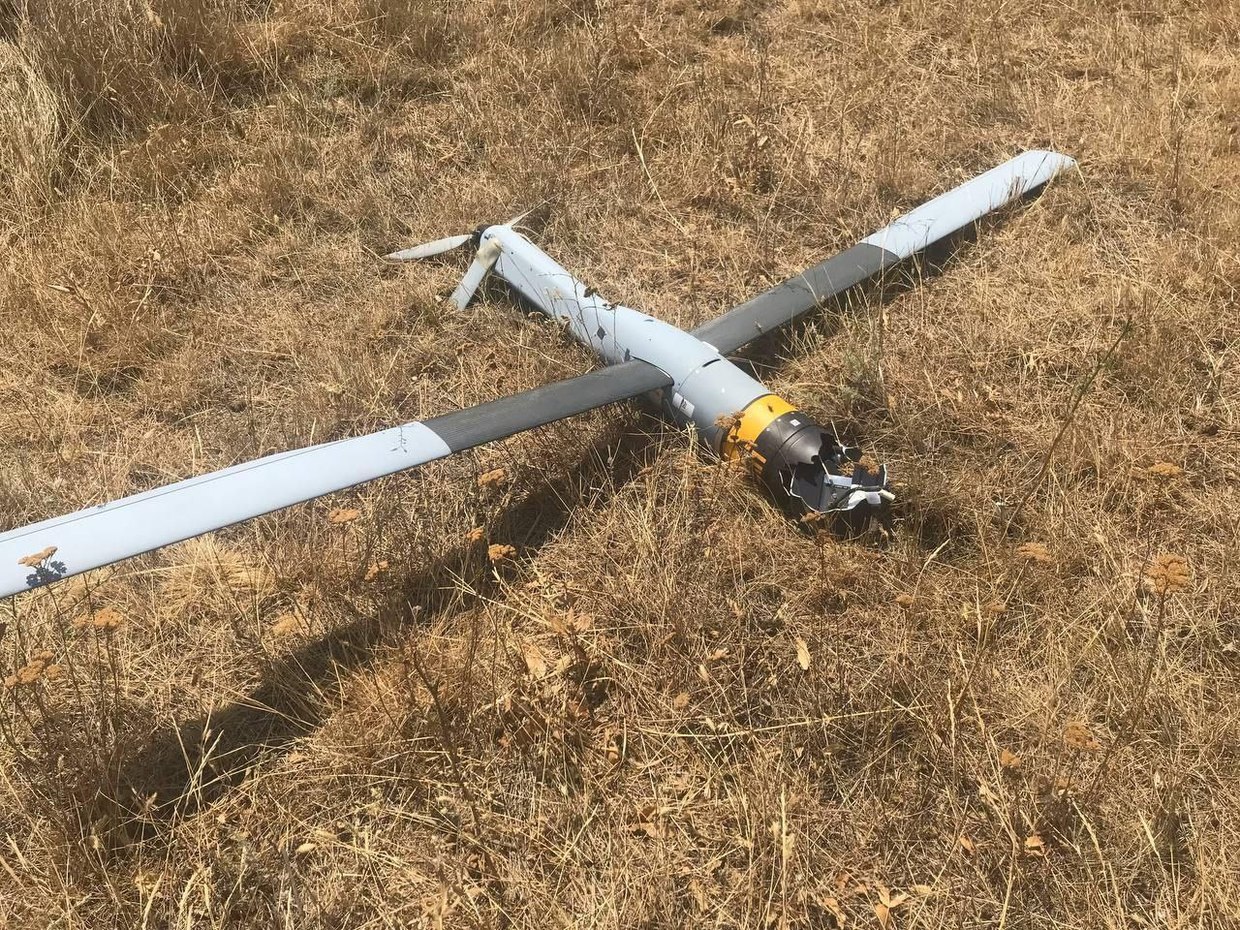
© Telegram; @mag_vodogray
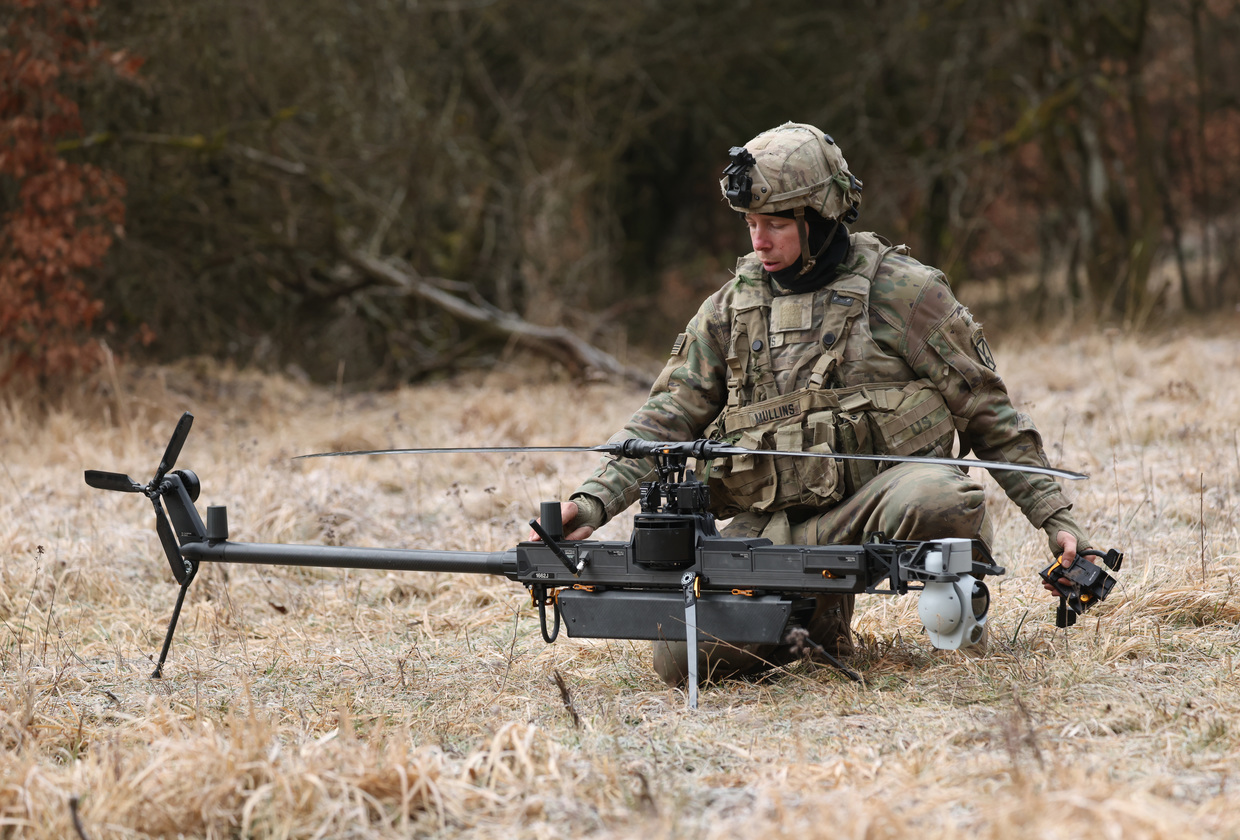
Anduril’s Ghost drones also proved vulnerable to Russian jamming and were easily confused by undulating terrain. Both Altius and Ghost UAVs failed spectacularly during demonstrations for the US military last year, as did almost every major Anduril project to date.
A fleet of unmanned attack boats running on Anduril’s ‘Lattice’ operating system refused to take commands and shut themselves down during an exercise in California last May; an anti-drone interceptor crashed in Oregon that August and caused a 22-acre fire; and the company’s flagship project, an AI-powered unmanned fighter jet named the YFQ-44A Fury, has suffered persistent delays due to mechanical failures and has been beaten to first flight by General Atomics’ YFQ-42 Dark Merlin.
© Getty Images; Sean Gallup
None of these setbacks would be apparent from Luckey’s public statements. “Our autonomous weapons have destroyed hundreds of millions worth of Russia’s war machine,” he claimed last year, long after Ukraine rejected the Altius and Ghost systems. Two months later, Luckey confirmed the delivery of a batch of Altius drones to Taiwan, describing the sale as “an enormously consequential moment for Anduril and for the free world.” In a social media post, Anduril claimed that the US military has “consistently praised” Ghost’s reliability, despite a service member labelling the project a “clusterf**k” to Reuters.
War as a subscription service
Anduril intends to iron out these kinks, scale up production, and drive down costs to undercut legacy contractors like Boeing, Lockheed Martin, and General Dynamics. But this goal presents another problem: mass-produced, low-cost weapons are only profitable if they are constantly consumed and replaced. Legacy contractors can sell big-ticket items like fighter jets and intercontinental ballistic missiles during peacetime, but Anduril’s future is tied to the likelihood of a major regional or world war. Luckey’s hawkishness on China makes sense, therefore, as a business strategy.
READ MORE: Palantir touts record expansion and ‘battlefield’ AI value
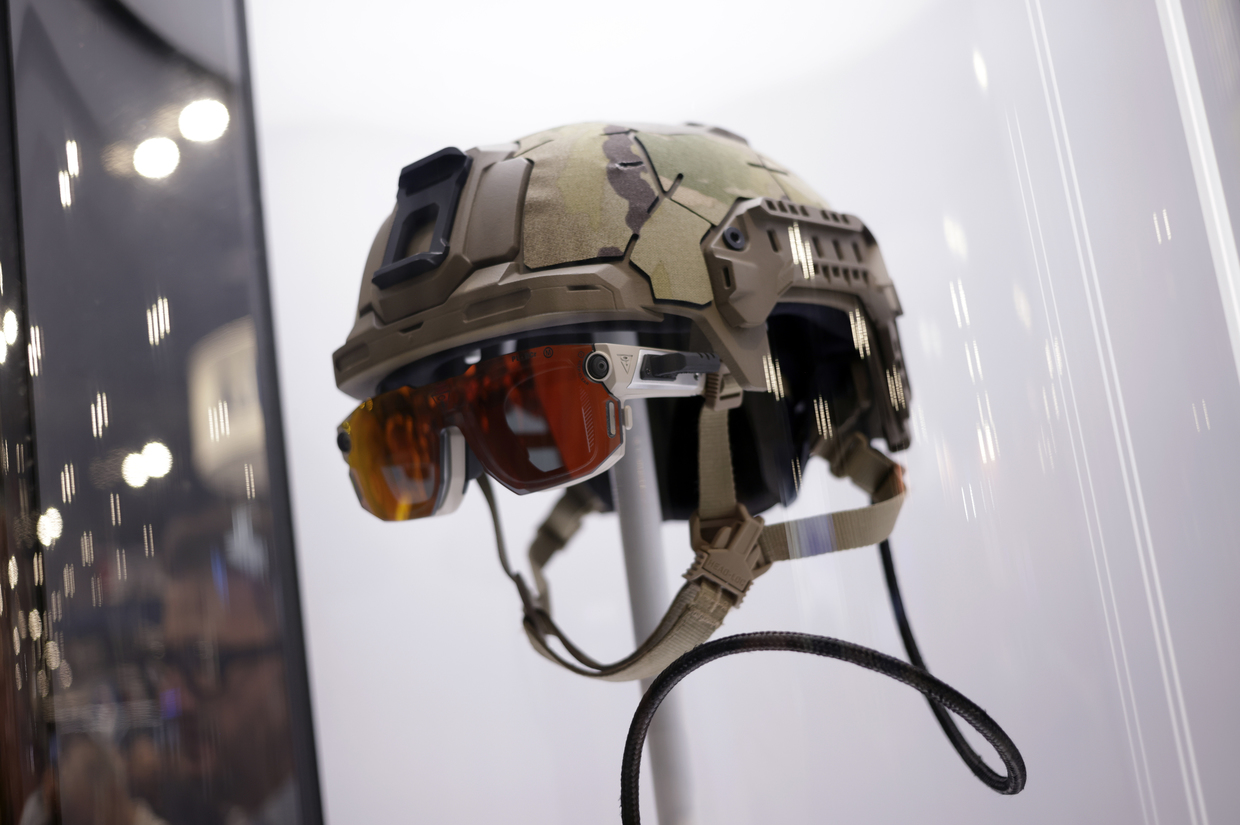
Without a devastating war to pump demand for its hardware, Anduril has its software to fall back on. Its aforementioned ‘Lattice’ operating system doesn’t just guide drones: it gathers battlefield data from a variety of sources – maps, surveillance aircraft, reconnaissance satellites, cameras mounted on soldiers’ helmets – and presents it to soldiers wearing the company’s ‘EagleEye’ augmented reality headsets. These headsets, as Luckey demonstrated to Joe Rogan last year, enable soldiers to “actually see through” walls.
The Pentagon is betting big on the promise of Lattice and EagleEye, handing Anduril $159 million last year to develop a prototype headset, and $967 million in 2020 to develop Lattice. However, when it comes to selling software-as-a-service to the Pentagon, Anduril is competing with established players: Palantir’s ‘Gotham’ is already in use by multiple US defense and intelligence agencies; ShieldAI’s ‘Hivemind’ has been tapped to guide the Pentagon’s ‘LUCAS’ attack drones; and Saronic’s ‘Echelon’ has been selected by the US Navy to pilot its unmanned naval attack craft.
Compared to its competitors, Lattice has come up short. “We cannot control who sees what, we cannot see what users are doing, and we cannot verify that the software itself is secure,” an internal US Army memo concluded after the platform was tested last September. After the fleet of attack boats running on Lattice became uncontrollable in California, a US Navy report highlighted “continuous operational security violations, safety violations” and mistakes by Anduril that, if left uncorrected, would present an “extreme risk to force and potential for loss of life.”
Palmer Luckey’s big break
© Getty Images; Luke Sharrett
A lifelong virtual reality enthusiast, Luckey founded Oculus in 2012 and got his big break when Meta (then Facebook) bought the company for $2 billion, just two years later. Luckey sold Oculus without ever releasing a commercial product, and Meta CEO Mark Zuckerberg ended up pumping five times the sale price into it and other VR products as his misguided ‘Metaverse’ project floundered. As of January, Meta’s ‘Reality Labs’ VR division has posted $80 billion in operating losses since 2020.
Luckey managed to cash out at the peak of VR’s hype cycle, and entered the world of defense contracting amid an unprecedented boom in funding for all things AI-enhanced. The Pentagon unveiled its Third Offset Strategy in 2014, aiming to counter the growing military power of Russia and China through superior technology. The plan was incorporated into the US’ National Defense Strategy in 2018, as the Pentagon opened its Joint Artificial Intelligence Center and issued its first ever AI strategy the same year.
According to publicly-available figures, the Pentagon has spent $145 billion on this modernization drive to date.
Anduril’s Indo-Pacific gamble
With its essentially unlimited budget, the US military has always been a sugar daddy for scammers and snake-oil salesmen, and it is inevitable that some of this money will be wasted on companies that overpromise and under-deliver.
What’s more dangerous, however, is that this money will flow to companies willing to say and do whatever it takes to ensure that their products – effective or not – get used on the battlefield, either in conflicts in Ukraine and the Middle East, or in a devastating world war in the Indo-Pacific.
Luckey has said that he wants the US to stop acting as the world’s policeman, and become the “world’s gun store” instead. He also maintains that defense contractors should function as extensions of the American government, and has pledged to align his arms sales with Washington’s foreign policy goals. Based on Palmer’s own words, Beijing likely heard his comments on Taiwan not only as a sales pitch, but as a statement of intent. The cost of miscalculation could be huge.