
From Minuteman silos to hypersonic missiles, the Pentagon is preparing for a new era of confrontation
The US boasts impressive military capabilities that solidify the country’s position among the world’s military powers. This also applies to missile technology – the US maintains its status as a major global missile power, and long competed with the Soviet Union in the missile and space race.
The US did not immediately recognize the potential for developing powerful rockets for launching spacecraft and delivering nuclear warheads over intercontinental distances. However, it soon caught up with the USSR and leveraged its advantages effectively. By investing significant resources and attracting top engineering talent, the US achieved breakthroughs in several areas: Solid rocket fuels, simple silo-based launch systems, compact thermonuclear warheads, and advanced guidance systems enhanced by cutting-edge electronics. These advancements ultimately led to the development of Multiple Independently Targetable Reentry Vehicles (MIRVs) and cruise missiles.
The Cold War rivalry with the Soviet Union played a crucial role in the evolution of US missile technology, particularly in the development of the nuclear triad.
Historical background
The US strategic nuclear forces were initially composed of a substantial fleet of long-range bombers designed to carry atomic bombs. Though the US was engaged in developing rocket technology, at the time, it did not receive the same level of priority as it did in the Soviet Union.
In the aftermath of World War II, the US, like the USSR, studied the rocket-building legacy of the Third Reich. This endeavor was bolstered by the defection of prominent German rocket scientists like Wernher von Braun to the US. The foundation for US rocketry was laid in the late 1940s with the replication of German V-2 missiles. Subsequently, American engineers began implementing new technologies that were pioneered in Germany, such as fuel tanks, new engine types, and fuels. By 1958, this led to the development of medium-range missile projects like Redstone, Thor, and Jupiter. That same period saw the initiation of work on Atlas – America’s first liquid-fueled intercontinental ballistic missile (ICBM) which proved to be more compact than the R-7 – the world’s first ICBM developed in the USSR by Sergey Korolev.
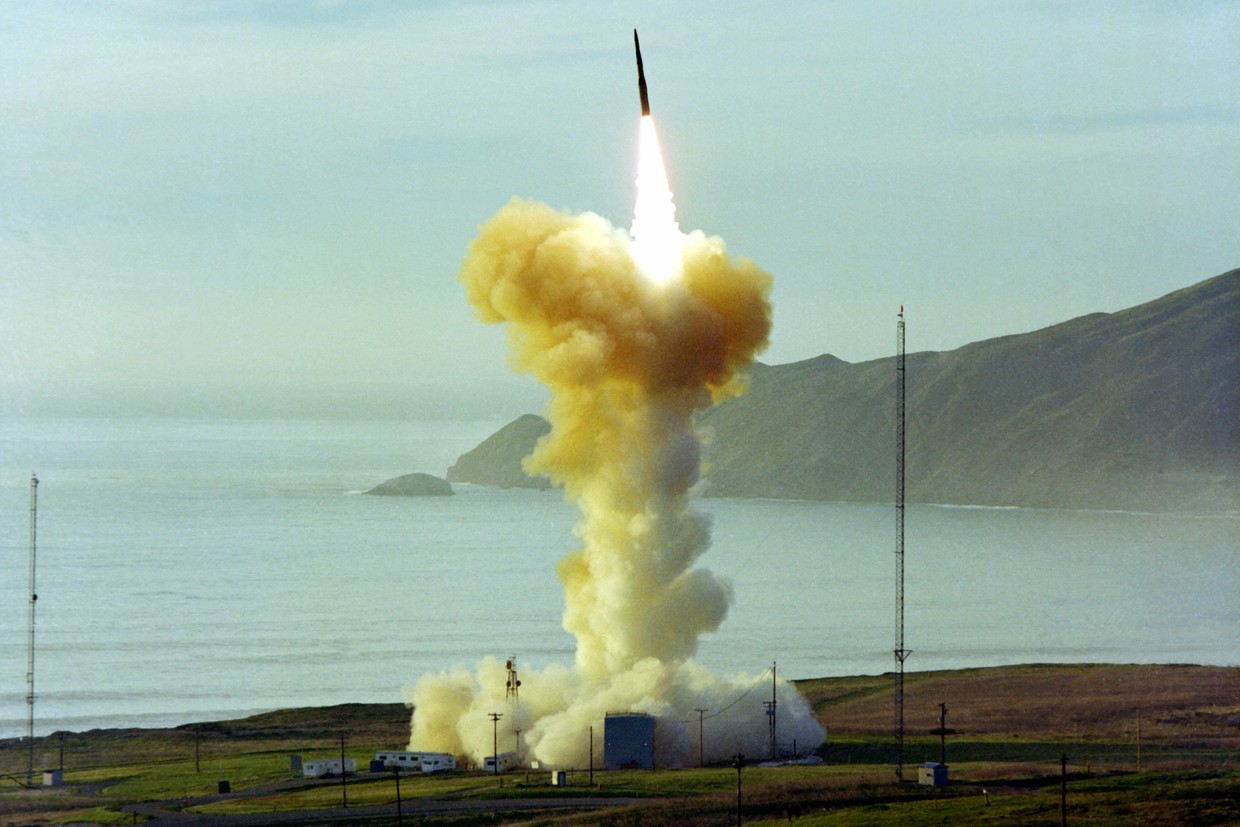
The rapid advancement of chemical technologies in the US fueled rapid progress. At the time, solid propellant for missiles (composite propellant) was developed. This breakthrough facilitated the development of relatively compact submarine-launched missiles and initiated the deployment of the first American solid-fueled intercontinental missile, Minuteman I, in 1962. The benefits of solid fuel were clear: Ease of maintenance, non-toxic and non-self-igniting components, high reliability, and sufficient characteristics for delivering payloads. In the early 1960s, the US deployed both liquid-fueled ICBMs equipped with heavy megaton warheads and solid-fueled Minuteman missiles with medium-yield warheads; however, over time, only the Minuteman remained in service with the US Army.
© HUM Images / Universal Images Group via Getty Images
Efforts were also underway to develop supersonic intercontinental cruise missiles like the AGM-28 Hound Dog and air-launched ballistic missiles for the US Air Force. By the 1970s, however, the focus shifted toward subsonic air-launched long-range cruise missiles. Interestingly, some speculate that the CIA ‘borrowed’ this idea from Soviet developers, whose project from the late 1960s failed to gain traction in the Kremlin and was subsequently shelved.
The nuclear triad: Strategic systems
The modern US nuclear triad comprises a classic set of missile systems: Ground-launched ICBMs, submarine-launched ballistic missiles (SLBMs), and air-launched cruise missiles and bombs. The US strategic nuclear forces are characterized by a minimized set of systems: One type of ICBM, one type of SLBM, and one type of nuclear-armed cruise missile. While the inventory of aerial nuclear bombs is more varied, efforts are underway to minimize the variety of bombs by developing warheads with adjustable yields.
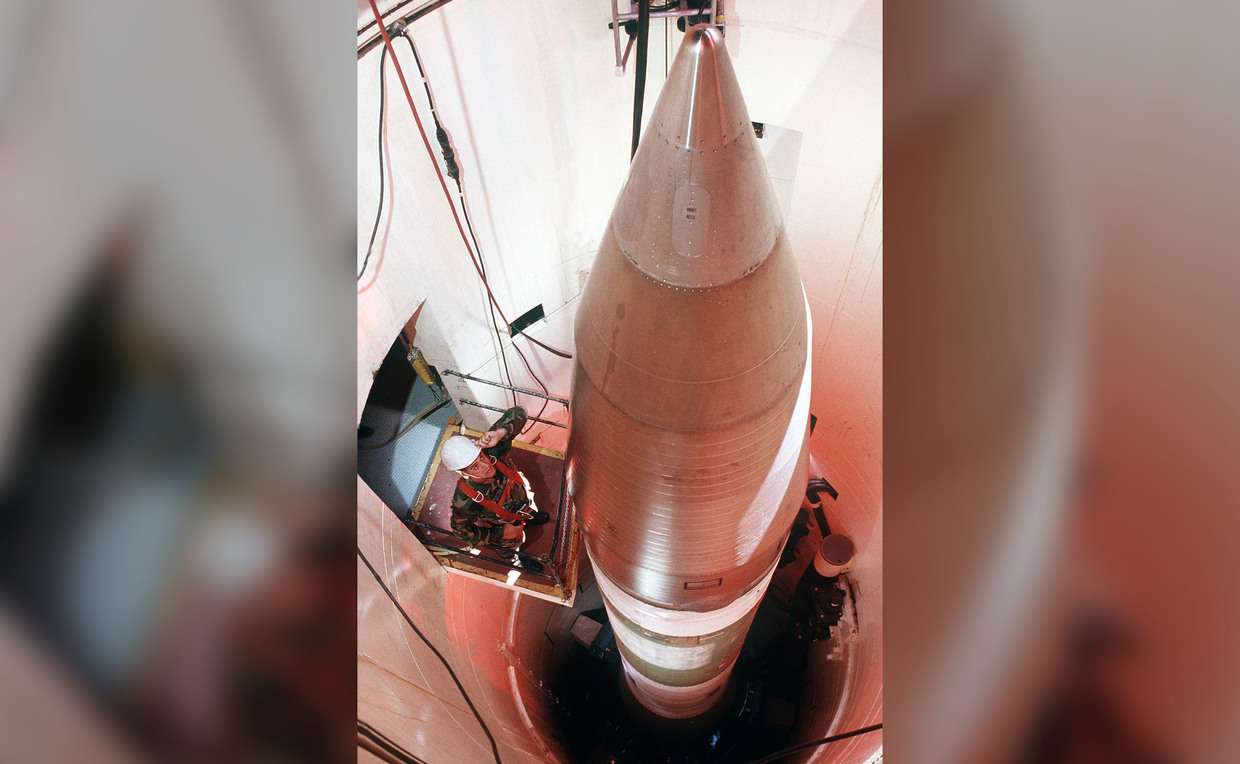
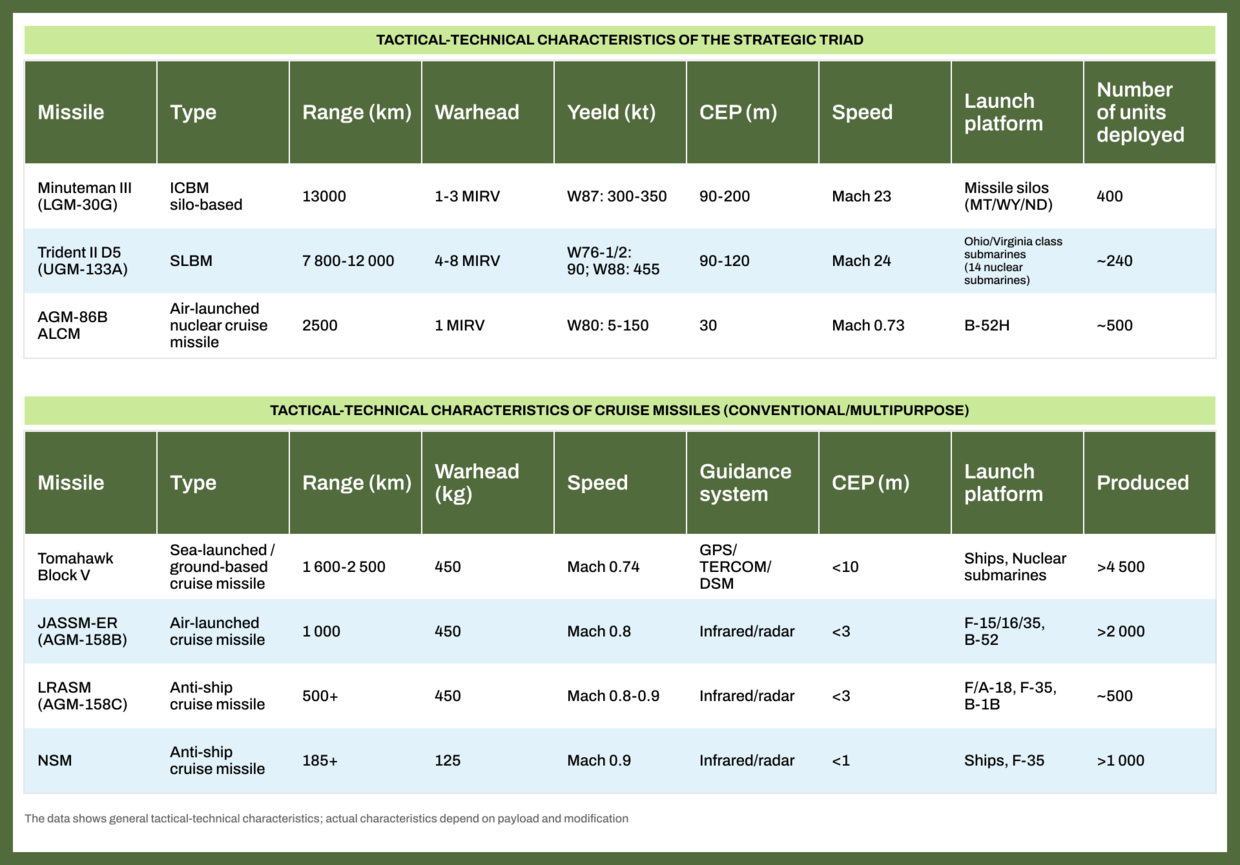
Currently, around 400 solid-fueled LGM-30G Minuteman III ICBMs are deployed in silo launch facilities across the US. These missiles were originally introduced in the early 1970s and have undergone several upgrades since then. They boast a range of up to 13,000 km and can be armed with up to three W78/W87 MIRV warheads, each yielding 300-350 kilotons of TNT equivalent. Advanced guidance systems ensure accuracy within the 90-200 meter range. Minuteman III missiles are expected to remain operational until the early 2030s, at which point they will gradually be replaced by the new Sentinel LGM-35A ICBMs.
© Getty Images / USAF
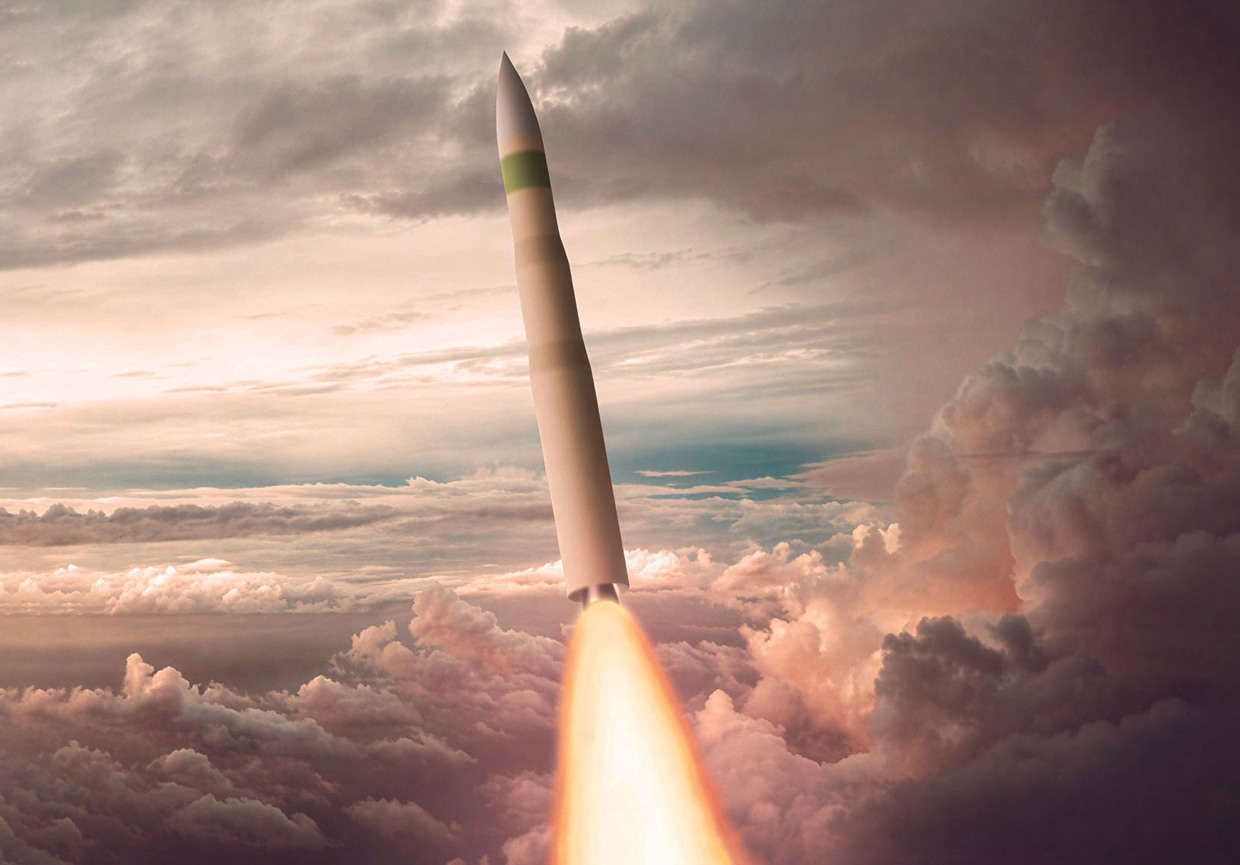
In 2026, the US is set to begin testing the new Sentinel missiles, with deployment to follow. The developers aimed to create a missile that could be launched from the same silos as Minuteman III, but it appears that new launch facilities may need to be built from scratch. The design of the Sentinel missile remains fairly conservative, featuring the same three stages and similar dimensions, albeit with new types of fuel, upgraded electronics, and warheads. However, there is currently no mention of hypersonic glide vehicles or other major innovations; the focus is on practicality and cost-effectiveness. Historically, funding for these types of programs has never been an issue.
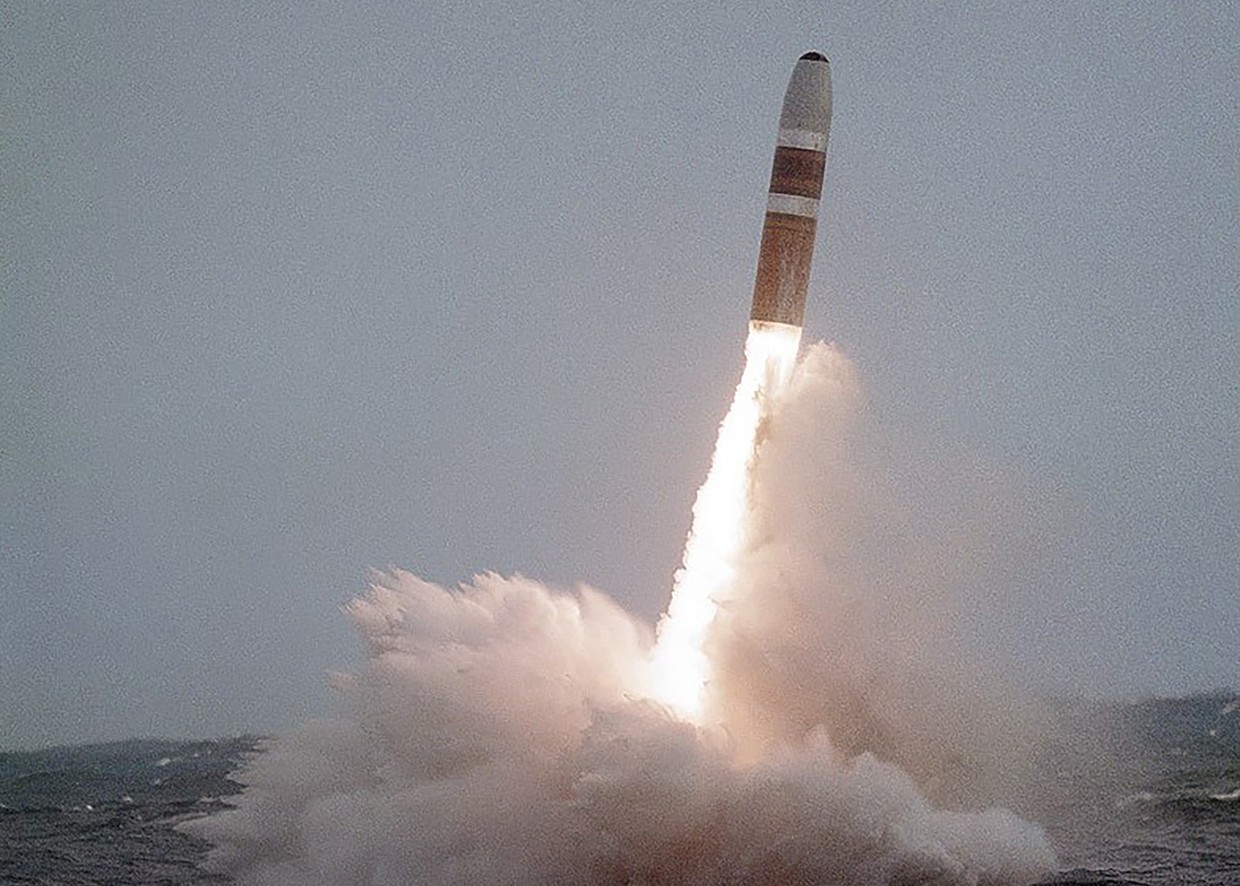
The situation with America’s underwater missile shield is similar. The US Navy does not plan to retire the highly successful UGM-133A Trident II D5 missile. Currently in service aboard Ohio-class submarines (14 submarines with 20 missiles each), the Trident II will also be deployed on new Columbia-class submarines (carrying 16 missiles each) which are currently under construction. British submarines are equipped with Trident II missiles as well. This effective three-stage ballistic missile has a range of 7,800-12,000 km and can carry up to eight type W76-1/2 (90 kilotons) or W88 (455 kilotons) thermonuclear MIRV warheads. Its Circular Error Probable (CEP) ranges from 90 to 120 meters. While Trident II missiles have been tested using low-trajectory flight paths to circumvent contemporary missile defense systems and achieve medium-range strikes, there have been no reports about the development of hypersonic warheads, though it’s possible that these types of projects are shrouded in secrecy.
© Universal History Archive / Universal Images Group via Getty Images
In the US Air Force, the nuclear-capable aircraft include around 60 subsonic B-52H bombers, 20 B-2A Spirit bombers utilizing stealth technology, and the more compact B-21 Raider second-generation bomber (there are plans to produce at least 100). The backbone of America’s nuclear arsenal consists of AGM-86B ALCM cruise missiles which were deployed in the mid-1980s. This subsonic missile, powered by a turbojet engine, has a range of 2,500 km and carries a thermonuclear warhead (W80) with a yield ranging from 5-150 kilotons. Another key weapon is the latest version of the B61 thermonuclear bomb. Looking ahead, the cruise missiles are set to be replaced by new Long Range Stand-Off (LRSO) missiles, also with a range of at least 2,500 km. It’s likely that one of the hypersonic air-launched missiles will be equipped with a nuclear warhead and will enter service in the coming years.
Significant funding is allocated for the development of strategic nuclear forces within the nuclear triad. This includes the Sentinel LGM-35A program, construction of nuclear-powered ballistic missile submarines, and the development of new Nuclear-Armed Sea-Launched Cruise Missile (SLCM-N) for the US Navy, including new Trump-class battleships. There are also several programs focused on developing air-launched missiles.
© Wikipedia
Non-nuclear missile systems
Since the 1990s, the US has focused on developing long-range non-nuclear missile systems. Several types of cruise missiles have been adopted by the US Air Force and Navy and were used in policing operations worldwide.
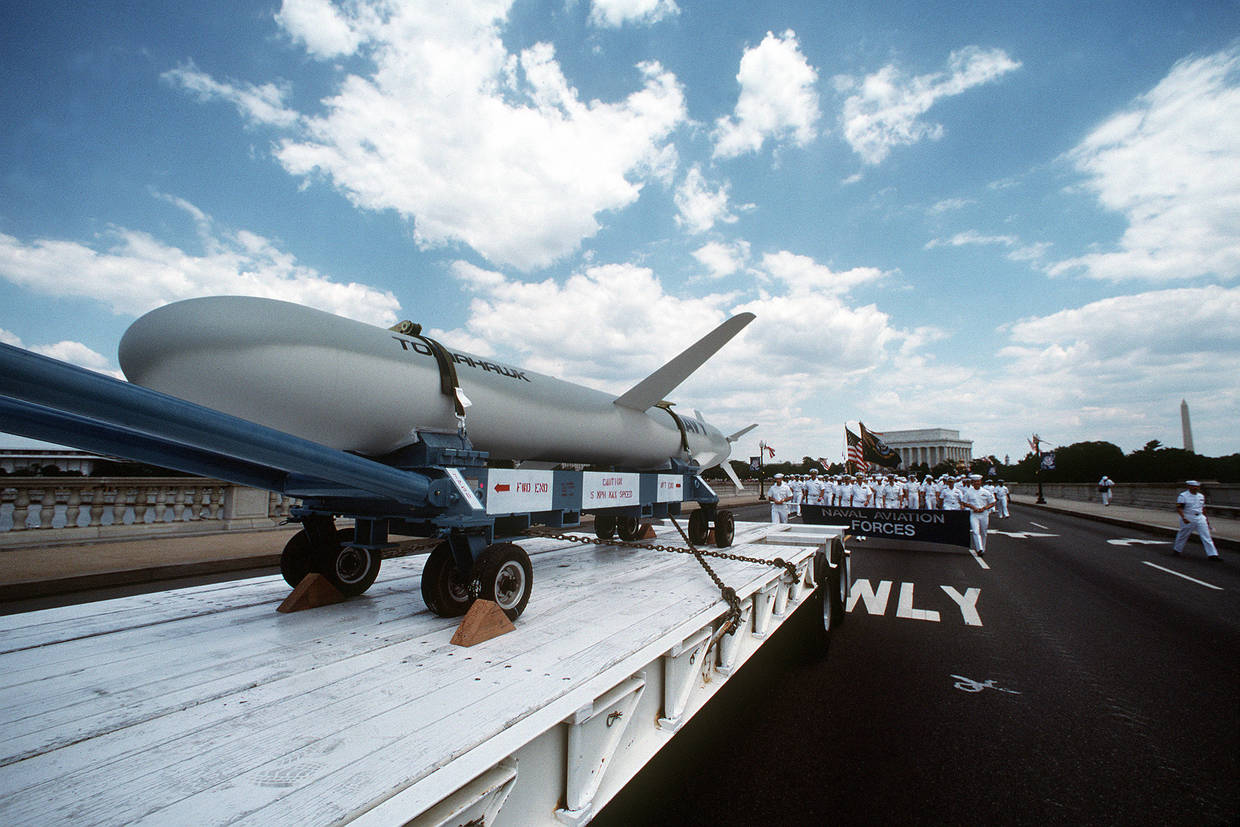
At the forefront of these systems is the Tomahawk BGM-109 cruise missile developed by Raytheon. It is the most widely produced naval cruise missile in the US, with over 4,500 units manufactured. Depending on the variant, these missiles are equipped with various types of warheads and have ranges from 1,600 to 2,500 km. The guidance system is fully autonomous, utilizing extreme navigation technologies, as well as satellite navigation systems. The subsonic missile flies at low altitudes, reaching speeds of around 880 kph. These missiles are widely deployed on US ships and submarines, and are also in service with several other navies. Arleigh Burke-class destroyers launch them from vertical launch systems, while Ohio-class SSGN submarines use specialized launch systems; all other types of US attack submarines can also fire Tomahawks from torpedo tubes or launch systems. Tomahawk missiles are versatile and effective not just against land targets but also as anti-ship missiles.
© Global Look Press / IMAGO
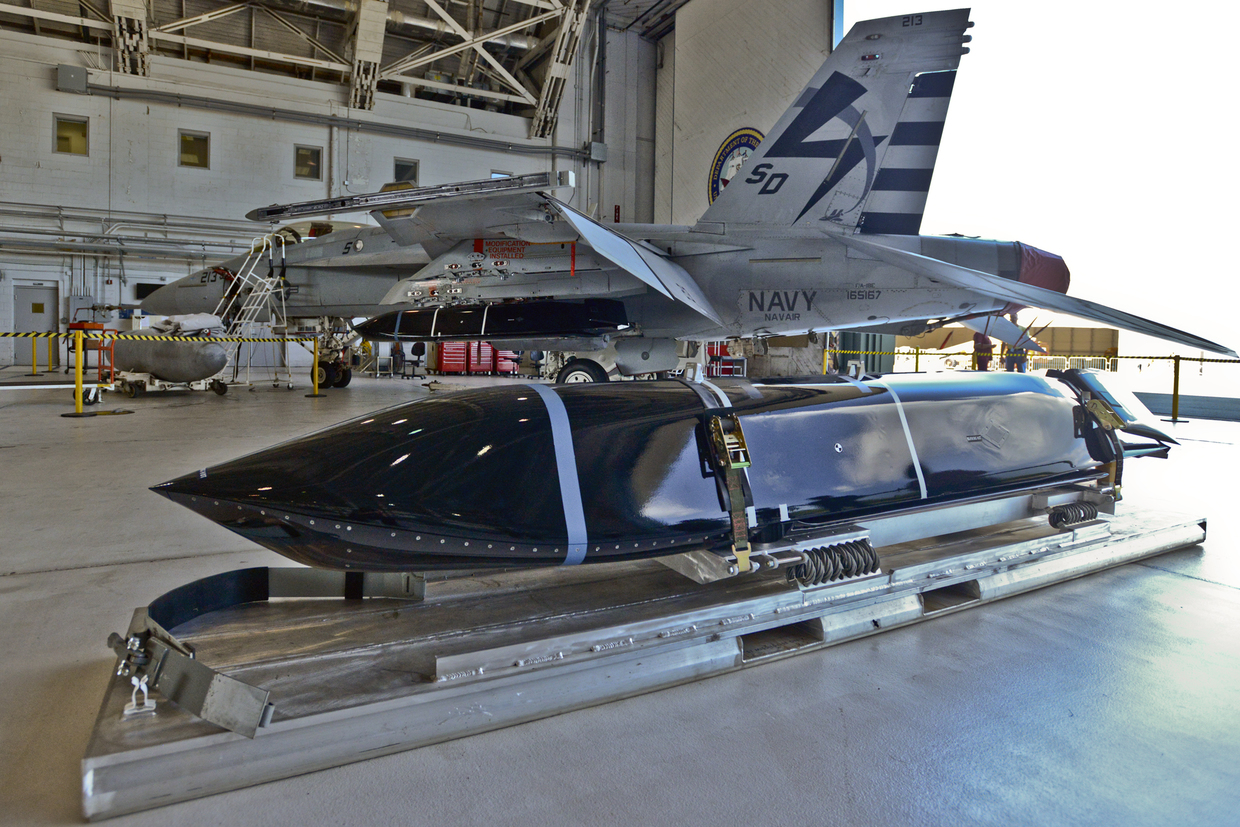
During the 1990s and 2000s, air-launched cruise missiles like the JASSM AGM-158B and its extended-range variant, the JASSM-ER, developed by Lockheed Martin, were introduced. These missiles incorporate elements of stealth technology. The standard version has a range of around 500 km, while the Extended Range (ER) variant boasts a range of around 1,000 km. With their low observability, these missiles are capable of effectively evading modern air defense systems and targeting protected assets.
The new missiles are set to be deployed on both supersonic B-1B long-range bombers and subsonic B-52H aircraft, as well as various types of frontline jets. Currently, efforts are underway to replace these missiles with the subsonic LRASM AGM-158C, which is being developed. This missile features advanced electronics and is designed to be even less observable.
© Wikipedia
Hypersonic weapons are also being developed for the US Air Force. Various projects have emerged, but the focus is now on the HACM (Hypersonic Attack Cruise Missile) project. This initiative aims to create a missile powered by an air-breathing scramjet engine, boasting a range of up to 1,900 km and speeds exceeding Mach 5. Flight tests are planned for 2026. They will determine whether the program receives the green light or gets shelved – similar to the earlier AGM-183A ARRW hypersonic air-to-surface missile project. While it may not match Russia’s Kinzhal missile, it is an original American technological solution.
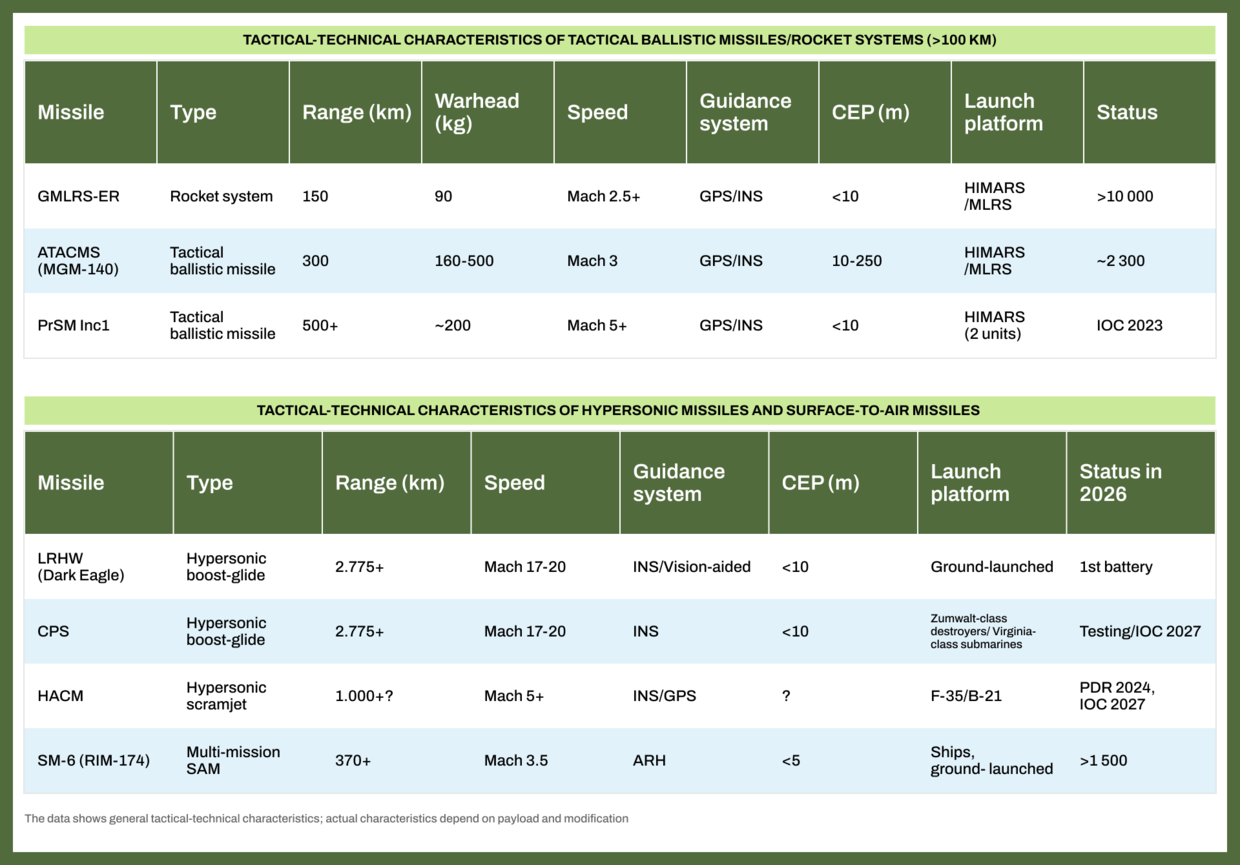
Finally, the US is developing several new land-based missiles. This includes a replacement for ATACMS tactical ballistic missiles – a new missile which is already being integrated into HIMARS and MLRS systems. This is the PrSM (Precision Strike Missile) developed by Lockheed Martin, with a baseline range of 500 km (expected to be expanded to 1,000 km in the future). This missile utilizes an inertial navigation system (INS) supplemented by satellite navigation data and its own seeker for terminal guidance. Its key advantage is that it can be deployed from existing launchers. Until PrSMs become widely available, however, the ground forces will continue to rely on several thousand ATACMS missiles, which have a maximum range of 300 km and come with various types of warheads, including cluster munitions and high-explosive options.
Another system in service with the US Army is the Typhon missile system. The military currently has around two Typhon batteries. This new mobile ground-based missile system can launch Tomahawk cruise missiles and the hypersonic Standard Missile-6. The Tomahawks in this system are identical to their naval counterparts, while the SM-6 is unique – it can engage both ground and air targets at ranges of up to 500 km, traveling at speeds greater than Mach 5. The Typhon gained attention during discussions regarding potential Tomahawk deliveries to Ukraine in 2025. At the time, it was suggested that if a political decision regarding these deliveries is made, sending a Typhon battery to Ukraine would be the most straightforward option. Thankfully, this cutting-edge missile system was not supplied to Ukraine.
Lastly, the LRHW Dark Eagle missile system is being prepared for deployment in the US. This land-based system includes a new ballistic missile designed to deliver an unconventional payload: The Common-Hypersonic Glide Body (C-HGB), capable of reaching speeds of Mach 17 to 20 and achieving ranges of nearly 2,800 km. Full-scale deployment of this missile system is expected to begin this year, with extensive plans for its use across Europe, Southeast Asia, and the Middle East.
The system is highly mobile and can be rapidly deployed anywhere. Its main advantage is its impressive speed and capability for anti-missile maneuvers. This makes it nearly unstoppable – but at what cost? The Dark Eagle program has become one of the most expensive missile initiatives in US history – with each missile costing around $40 million. That’s significantly more costly than the above-mentioned systems.
This sheds light on why the Pentagon’s budget for 2026 has reached a record high, and is projected to rise even more. The roll-out of several new missile programs is set to begin in 2026, and substantial funds have been allocated for this purpose. However, the results of all these initiatives for the strategic, naval, air, and ground forces cannot be fully assessed until the end of the decade.