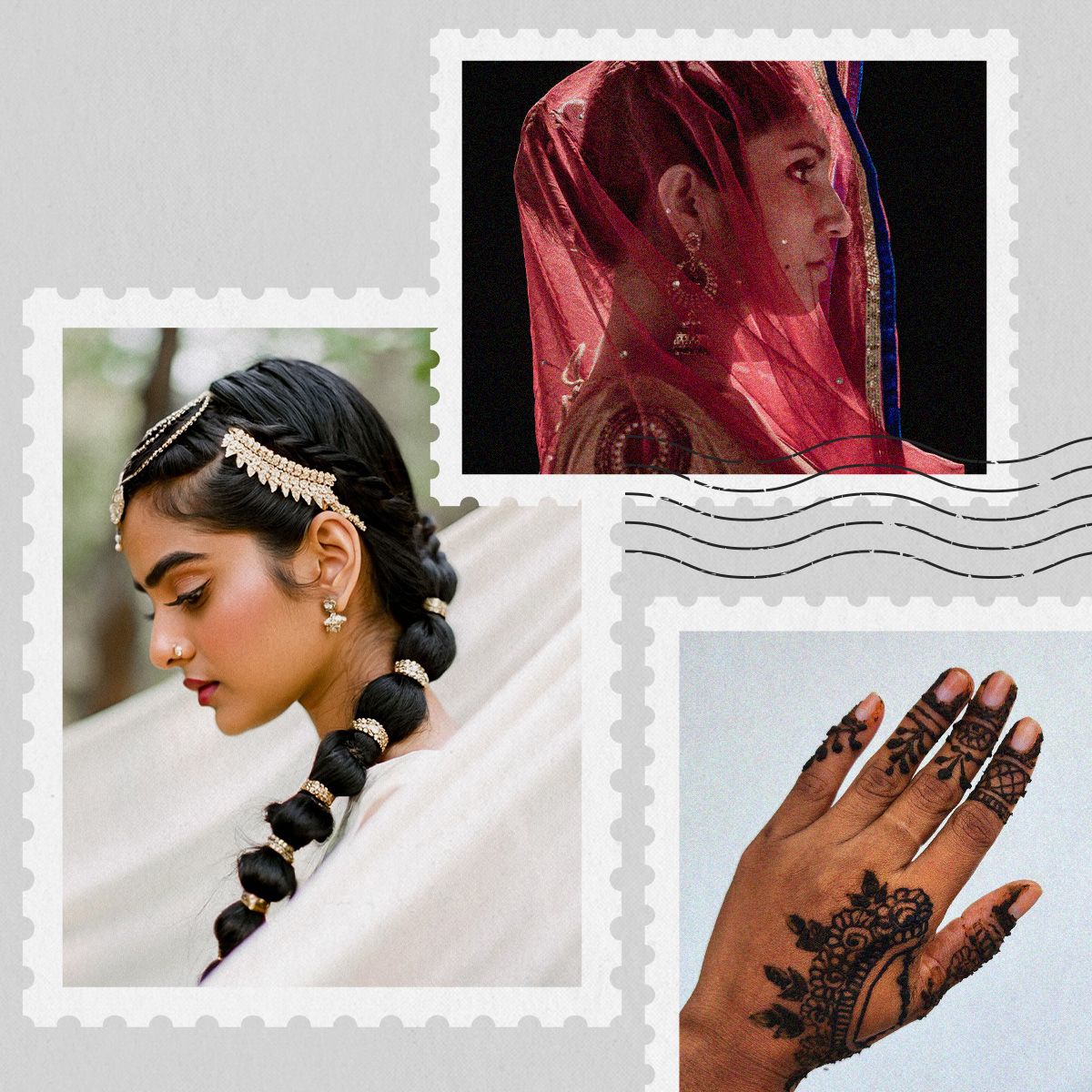

Welcome to Worldly Beauty, a quarterly franchise in which we highlight beauty products, ingredients, and traditions rooted in culture. To offer an in-depth look, we’re sharing perspectives and recommendations from local experts and tastemakers. A celebration of diversity, this column goes beyond what we know to shed light on the beauty practices and philosophies that make the world go round.

Beauty is innately personal, but never more so than on (or right before) one’s wedding day. In the modern era, it’s not uncommon for brides to book multiple makeup trials, peruse Pinterest for the perfect manicure, and even spring for in-office procedures to look and feel their best on the big day. No matter how minimalist or maximalist it might be, bridal beauty is both a reflection and a projection of the person behind the veil.
Pre-wedding beauty rituals aren’t homogenous; they differ greatly based on culture, geography, family tradition… The list goes on. In Korea, it might look like prepping for the paebaek—a formal tea ceremony during which the bride historically wears red dots on her cheeks. In Italy, it might look like prepping the bride’s hair and skin with olive oil–infused beauty products. However, in this first-ever special wedding edition of Worldly Beauty, we’re exploring the tradition of mehndi—a South Asian prenuptial practice in which henna is applied to the bride’s hands and feet to symbolize joy, prosperity, good fortune, and new beginnings.
The centuries-old tradition, which is also commonly practiced in the Middle East and North Africa, roots modern brides in rich, historical pasts. They might choose motifs inspired by previous generations, weave hidden initials into the elaborate artwork, or collaborate on contemporary designs. Regardless, it’s more than a bridal beauty tradition; it’s a celebration to mark one of life’s most meaningful milestones, and we’re exploring it with the help of Priyanka Ganjoo, founder and CEO of Kulfi Beauty.
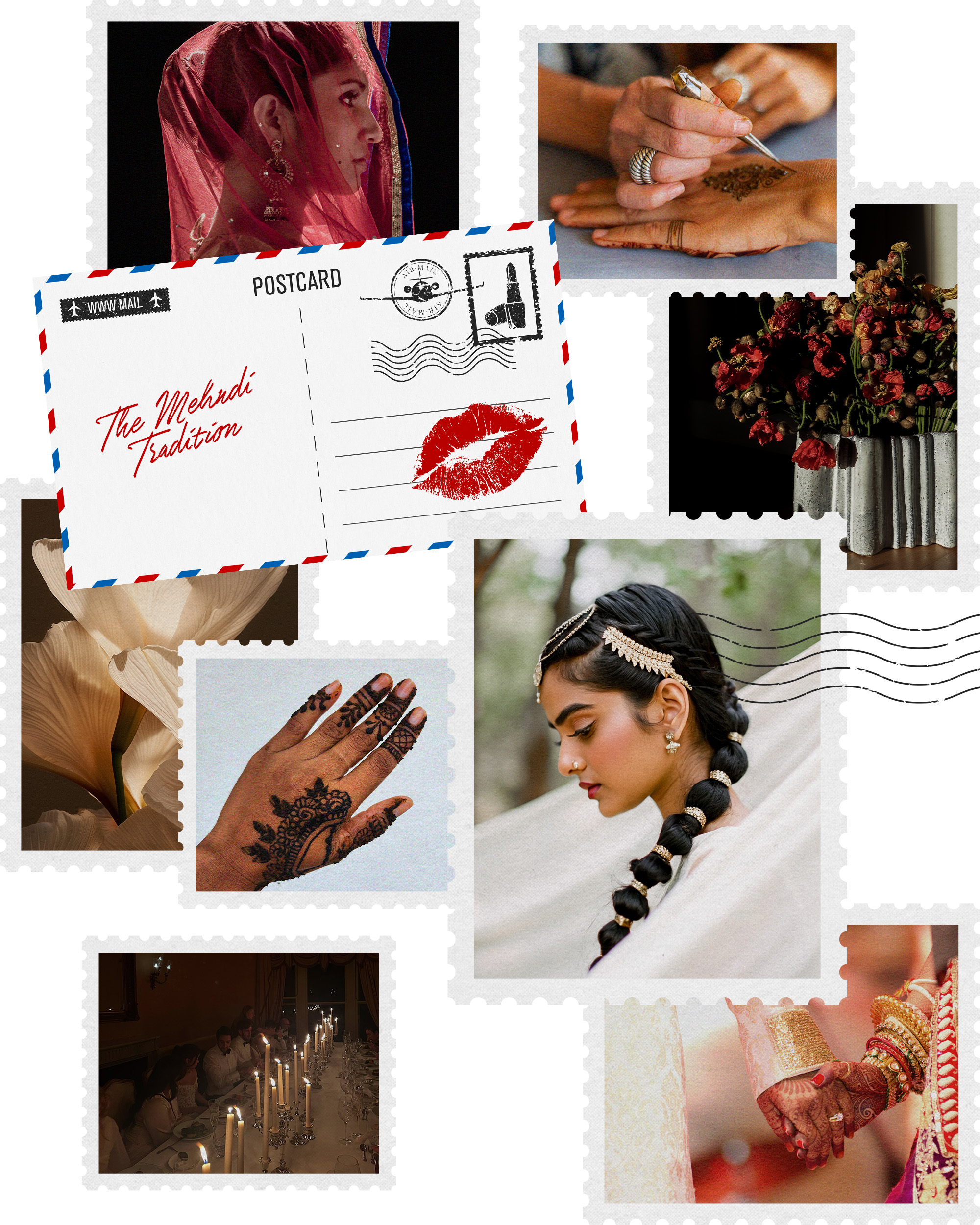
Henna is a plant that’s native to the tropical climates of South Asia, Africa, and Northern Australia. When a paste is applied to the skin, it temporarily stains it with a deep reddish-brown color that will fade with time. It’s been used for mehndi (the name refers to both the ceremony and the designs themselves) for thousands of years. These days, it’s often applied ahead of major holidays, festivals, and, of course, weddings.
Ganjoo says that long before vows are exchanged, friends and family gather for the bridal mehndi ritual. Artists will unfurl intricate designs across the hands and feet of the bride and other close family members. Traditionally, the bride gets the most extensive designs, whereas close friends and family members will receive smaller, simpler designs.
Some mehndi ceremonies are lively, incorporating music, dancing, and laughter. Others are smaller, more reflective gatherings centered on blessing the couple before marriage. “Every family celebrates it a little differently, but it’s generally a gathering where the bride’s hands and feet are decorated with intricate henna designs surrounded by loved ones,” Ganjoo says. “For me, it represents anticipation of celebration. It’s a moment when everything slows down before the bride. You have to sit still for hours while the people closest to you laugh, dance, tell stories, and celebrate this new chapter together. It’s not just about the final design. It’s about the time spent with the people you love.”
Ganjoo says a bridal mehndi can take anywhere from three to six hours, depending on the intricacy of the designs. While the final result is aesthetically eye-catching, the real magic is in the process itself, which gives the bride and their loved ones an opportunity to pause and be present with one another. “During that time, the bride is usually surrounded by friends and family. … As many know, it can be an incredibly busy time, so having to sit still while the henna is applied naturally creates a moment to be present and soak everything in.”
Professional artists are often employed to create traditional bridal mehndi, as the intricate designs require expert-level freehand skills. However, it’s possible to apply it to oneself via store-bought stencils and kits. “Typically, the paste stays on for several hours, and many brides leave it on overnight to achieve the richest stain,” Ganjoo says. “Once removed, the color starts as a bright orange before deepening into a rich reddish-brown over the next day or two. The stain gradually fades over one to three weeks, depending on the person’s skin, aftercare, and where it’s applied. I’ve always loved that the design evolves over time, making it beautiful and unique at every stage.”
Ganjoo says no two mehndi designs are exactly alike—that’s the whole point. It emphasizes individualism, expression, and creativity. “Many artists will use florals, paisleys, vines, mandalas, or symbolic motifs that have been passed down over generations. Sometimes brides also personalize their mehndi by weaving in meaningful details, like initials, places they’ve traveled, or elements that reflect their relationship. It can be deeply personal, and that allows every bride to tell their own story.”
Ganjoo was inspired by mehndi when she created Kulfi’s Mehndi Moment Blush ($38). “Our product names are always rooted in moments of joy from South Asian culture, and mehndi is no different. It isn’t just a ceremony; it’s a feeling. It’s the excitement before a celebration, being surrounded by people you love. We wanted Mehndi Moment to capture this feeling, melting into the skin to create a fresh, lived-in flush that feels effortless rather than overly perfected. It’s a creamy, buildable blush that nourishes and moisturizes your skin while giving you a bold yet natural flush of color.” [Note: The long-wearing blush will soon be discontinued, so longtime fans should stock up now before it’s too late.]
Like so many other bridal beauty rituals, mehndi is practiced for both practical and philosophical purposes. Practically, it offers an opportunity to pause and be present in the midst of pre-wedding chaos. Also, historically, the henna paste is thought to help alleviate stress, as it cools the hands and feet, both of which contain thousands of nerve endings. Philosophically, it symbolizes joy, luck, love, and new beginnings, as it prepares the bride to enter one of the most meaningful chapters of life: marriage. So while the mehndi will eventually fade from the bride’s hands and feet, it lingers on in memory, tradition, and cultural identity.